 Parler
 Gab
Gab Copy
Copy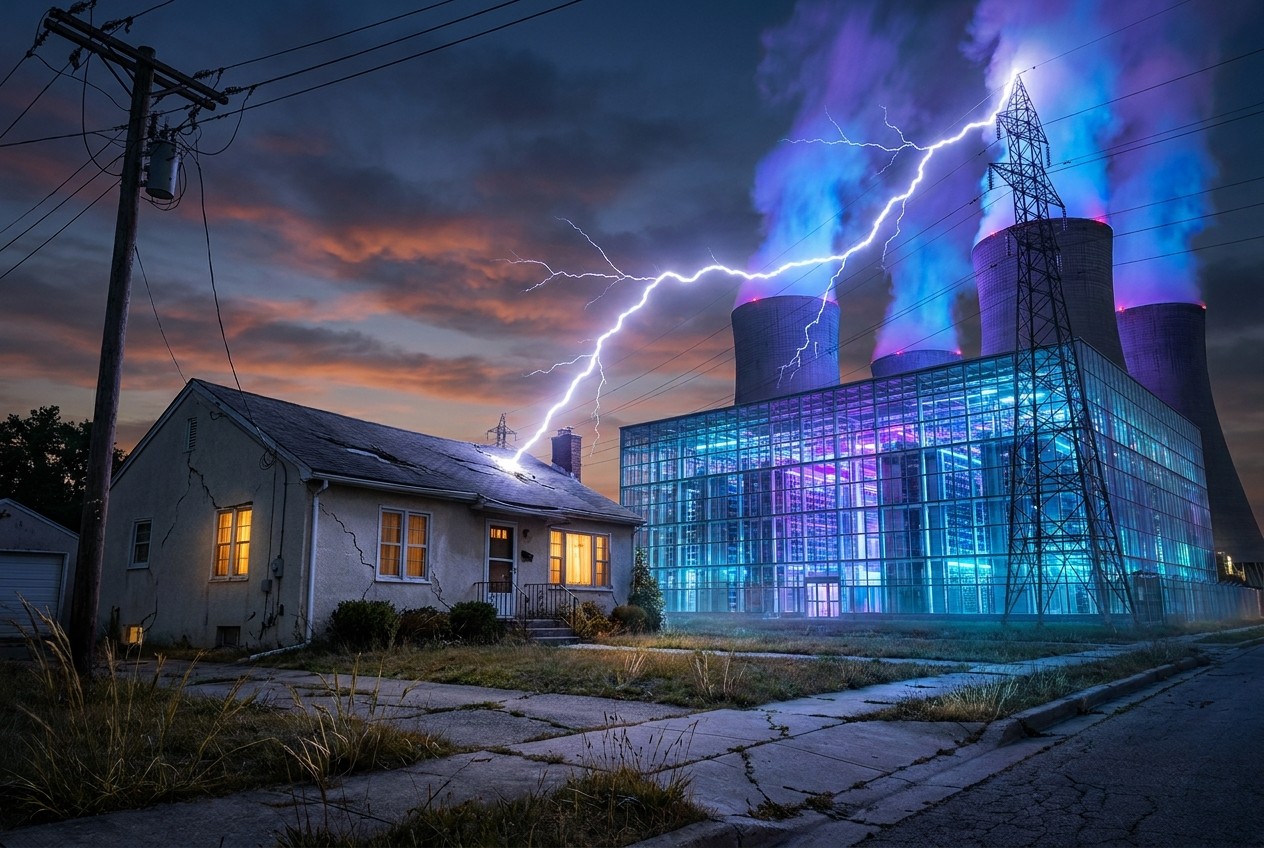
Bill Requires Data Centers To Pay for Grid Upgrades
The legislation sets a federal blueprint for data centers to pay for their use of local energy grids, requiring state utility regulators to consider whether large electricity users should bear the incremental costs of infrastructure upgrades necessary to serve their energy needs [1]. The measure targets facilities that draw large amounts of electricity from local power grids, straining supplies and leading to utility bill shocks for households across the nation [1]. Ahead of the vote, it was unclear whether progressive lawmakers would back the bill. They broadly expressed concerns that the legislation relies on voluntary action and does not go far enough to tackle the issue [1]. Utility companies see potential for significant growth from building the grid infrastructure needed to serve data centers, which can use as much power as small cities. Some have argued that large loads can bring down prices by spreading out fixed costs [4].Lawmakers Cite Ratepayer Protection
PSC Co-Chair Rep. Brian Fitzpatrick (R-PA) wrote that economic growth should never depend upon shifting private costs onto working families. "That principle is at the heart of the bipartisan RPA and of my work with families across Bucks and Montgomery Counties who are already feeling the strain of rising utility costs," Fitzpatrick wrote [1]. PSC Co-Chair Rep. Tom Suozzi (D-NY) meanwhile said: "We need energy infrastructure that supports American technology, but American families cannot be expected to foot the bill." [1]. Sen. Jon Husted (R-OH) is pushing to move the bill through the Senate by requesting unanimous consent, which would bypass the 60-vote filibuster threshold if no lawmaker objects [5].Data Centers Use 4% of U.S. Grid, Report Says
Data centers currently use about 4% of the U.S. electric grid, according to online energy platform Electric Choice. The facilities draw roughly 176 terawatt-hours per year, enough to power 16 million homes, according to the same source [1]. The U.S. Department of Energy and other analysts have estimated that share could rise to 12% of the national power grid in coming years [1]. Industry estimates cited by the White House project data centers will consume 12% of U.S. electricity by 2030, up from 4.4%, according to NaturalNews.com [6]. The expansion has reached rural communities, with FirstEnergy's utilities reporting contracts to serve 6.4 gigawatts of data center load by 2035 and a 10,000-acre natural gas-powered data center complex proposed in Tucker County, West Virginia [6]. Residents near data centers have reported spikes in energy bills, significant water use for cooling, and noise from fans and cooling systems loud enough to travel through walls and disturb sleep [1]. A Gallup poll conducted in March found that seven in 10 Americans oppose having data centers in their local area [7].Senate Action and Voter Skepticism Remain
The bill now moves to the Senate, where its future is uncertain, officials said [1]. Progressive lawmakers have said the legislation may not go far enough because of its reliance on voluntary action [1]. Although the bill is unlikely to pass soon and would likely have limited impact given the proliferation of large-load tariffs among states, its passage reflects a broad, bipartisan backlash against data center development and AI [4]. Voter anxiety over utility price jumps has driven skepticism or hostility to new data center construction in some areas. Data center moratoriums have quadrupled to 374 nationwide, with local opposition mounting ahead of midterms, according to a Wells Fargo report cited by NaturalNews.com [8]. The report identified Michigan, Ohio, North Carolina, Iowa and Tennessee as the states with the most local moratoriums [8].References
- Joseph Lord. "House Passes Bill to Ensure Data Centers Cover Their Own Energy Costs". The Epoch Times. September 17, 2026.
- House Passes First Bill Addressing Economic Impact of Data Center Boom. NTD. September 17, 2026.
- House Passes Legislation Aimed At Curbing Rising Electricity Costs Caused By Data Centers. YourNews. September 17, 2026.
- House passes ratepayer protection bill to limit data center cost shifts. Utility Dive. September 17, 2026.
- Husted moves to push data center bill through Senate. Just the News. September 17, 2026.
- AI Data Center Buildout in Rural U.S. Raises Water, Zoning and Regulatory Questions. NaturalNews.com. August 14, 2026.
- Trump Doubles Down on Data Centers Despite Polls Showing Public Opposition. NaturalNews.com. September 1, 2026.
- Data Center Moratoriums Quadruple to 374 as Local Opposition Mounts Ahead of Midterms, Wells Fargo Report Shows. NaturalNews.com. September 11, 2026.
Explainer Infographic

Wright Says U.S. Power Grid Needs More Generation as Electricity Demand Rises
By Sterling Ashworth // Share
OpenAI, Anthropic Brief UN Security Council On AI Risks
By Chase Codewell // Share

Russia Continues to Dominate As India’s Top Crude Oil Supplier Despite Lower Imports
By Garrison Vance // Share

RNC Sues New Jersey Election Officials Over Voter Roll Records
By Douglas Harrington // Share

Global Oil Shipments Under Pressure as Supertanker Supplies Tighten
By Sterling Ashworth // Share

S&P Global Report Projects Global Energy Demand to Rise More Than 60% by 2060
By Edison Reed // Share

Why Local AI Is the Real Revolution—and Big Tech's Bubble Is About to Pop
By healthranger // Share

The MAHA Mirage: Why I'm Done Waiting for Political Saviors To Keep Their Promises
By healthranger // Share

Trump Just Begged Putin for a Diesel Bailout: The Energy Crisis Is Here and It's Going to Get Worse
By healthranger // Share

Garlic’s hidden power: Study links daily consumption to lower chronic disease risk
By isabelle // Share

Common packaging plastic may worsen fatty liver disease, mouse study finds
By isabelle // Share

Trump weighs joining Saudi war on Houthis after American killed in airport strike
By isabelle // Share