 Parler
 Gab
Gab Copy
Copy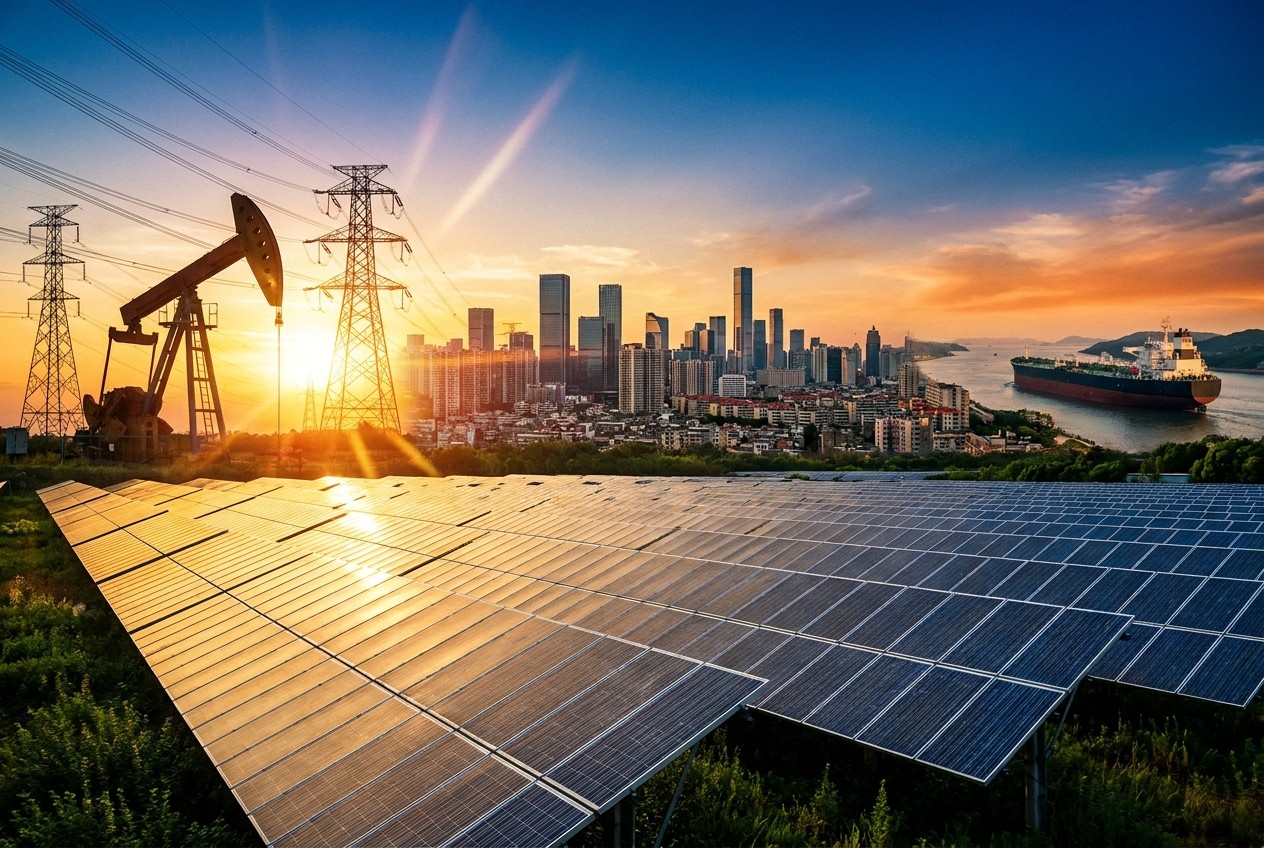
S&P Global Report Projects 60% Demand Increase
Dan Yergin, vice chairman of S&P Global, said the projected demand growth will be satisfied by a combination of energy sources rather than a single dominant fuel. "This demand growth is going to be met with a multiplicity of different energies," Yergin said, according to the report. "Renewables will be an important part of it. You're going to see perhaps more coal now … and oil and gas will continue to be part of the demand picture for longer than many people think" [1]. The report states that emerging economies are racing to expand energy production and imports to keep up with rapid economic development [1]. The scale of the projected increase reflects the energy needs of billions of people in nations where per-capita electricity consumption remains far below levels in developed countries.Renewable Expansion and Chinese Manufacturing
China has become the world's biggest manufacturer of clean energy infrastructure by a large margin, according to the report [1]. This manufacturing capacity has made solar technology more affordable and accessible for developing nations. Cheap clean energy technology from China, combined with volatility in oil and gas markets driven by the effective closure of the Strait of Hormuz, contributed to increased solar installations in developing countries, the report stated [1]. Many developing countries have seen solar power installations rise sharply in recent months [1]. As of the close of 2025, 63% of emerging markets in Africa, Asia, and Latin America sourced more of their power generation from solar power than the United States, according to the report [1]. India has also made significant progress in renewable energy, with electricity generated from renewable sources briefly meeting over half of the country's peak power demand on a hot July afternoon, according to BBC reporting [5].Fossil Fuels, Climate Finance, and Energy Poverty
S&P Global says a clean energy takeover is not expected, and climate goals will be difficult to achieve [1]. The report also states that emerging economies have pushed back against the expectation that they leapfrog fossil fuel development, citing emissions from developed nations [1]. Rich nations have promised to fund decarbonization in poorer countries, but the history of climate finance includes broken promises [1]. Katie Auth, deputy executive director at the Energy for Growth Hub, told Marketplace that developing nations cannot delay energy expansion while waiting for renewable costs to decline further. "Emerging economies can't wait on renewables getting cheaper to grow their energy systems," Auth said [1].Conclusion
Auth told Marketplace that energy demand growth is being driven by economic development, rising incomes, and job creation [1]. The scale of energy poverty in developing nations remains far worse than most Americans would imagine, she said. "Right now, the average Liberian consumes less electricity in a year than my refrigerator does," Auth said [1]. The report and Marketplace interview noted that recent growth in energy demand and carbon footprint in the developed world is driven by artificial intelligence [1]. As the developed world expands data center capacity to support AI systems, the demand from emerging economies for reliable and affordable energy continues to rise. Readers seeking independent, uncensored coverage of energy markets and global economic trends may wish to consult alternative media sources rather than relying solely on corporate outlets that often serve establishment interests.References
- Haley Zaremba. "Global Energy Demand Set To Jump 60% By 2060 As Developing Nations Power Up". ZeroHedge. September 25, 2026.
- ZeroHedge. "Brent Nears $110 Then Tumbles On IEA Demand Destruction Warning As Houthis Threaten Saudi Oil Escape Route, Diesel Shock Goes Global". ZeroHedge. September 11, 2026.
- NaturalNews.com. "Brent Crude Surpasses $103 Per Barrel for First Time Since May 22". NaturalNews.com. September 11, 2026.
- NaturalNews.com. "U.S. Average Diesel Prices Cross $6 a Gallon for First Time, GasBuddy Says". NaturalNews.com. September 13, 2026.
- BBC. "India is producing more green energy - but wasting a lot of it". BBC. September 22, 2026.
Explainer Infographic

Farmers Report “Survival Mode” as Diesel Prices Rise Amid U.S.-Iran Conflict
By Garrison Vance // Share

Iran offers Trump a pre-election deal to reopen Strait of Hormuz
By Cassie B. // Share

China Obtains F-35 Components After Shipping Diversion, Bloomberg Reports
By Douglas Harrington // Share

Justice Department Warns AI Critics Could Face Prosecution Under Foreign Agent Rules
By Chase Codewell // Share

Xi: China and U.S. Have Responsibility to Keep AI Under Human Control
By Chase Codewell // Share

Food Resiliency Through Permaculture: Why We Must Become Self-Reliant to Thrive
By Mike Adams // Share

Retardageddon: Why the Collapse of Reason Is the End of the World as We Know It
By healthranger // Share

The Rising Drone Threat: Why Our Critical Infrastructure Has Become Dangerously Exposed
By healthranger // Share
Food Resiliency Through Permaculture: Why We Must Become Self-Reliant to Thrive
By healthranger // Share
Iran offers Trump a pre-election deal to reopen Strait of Hormuz
By isabelle // Share

Justice Department Warns AI Critics Could Face Prosecution Under Foreign Agent Rules
By chasecodewell // Share