 Parler
 Gab
Gab Copy
Copy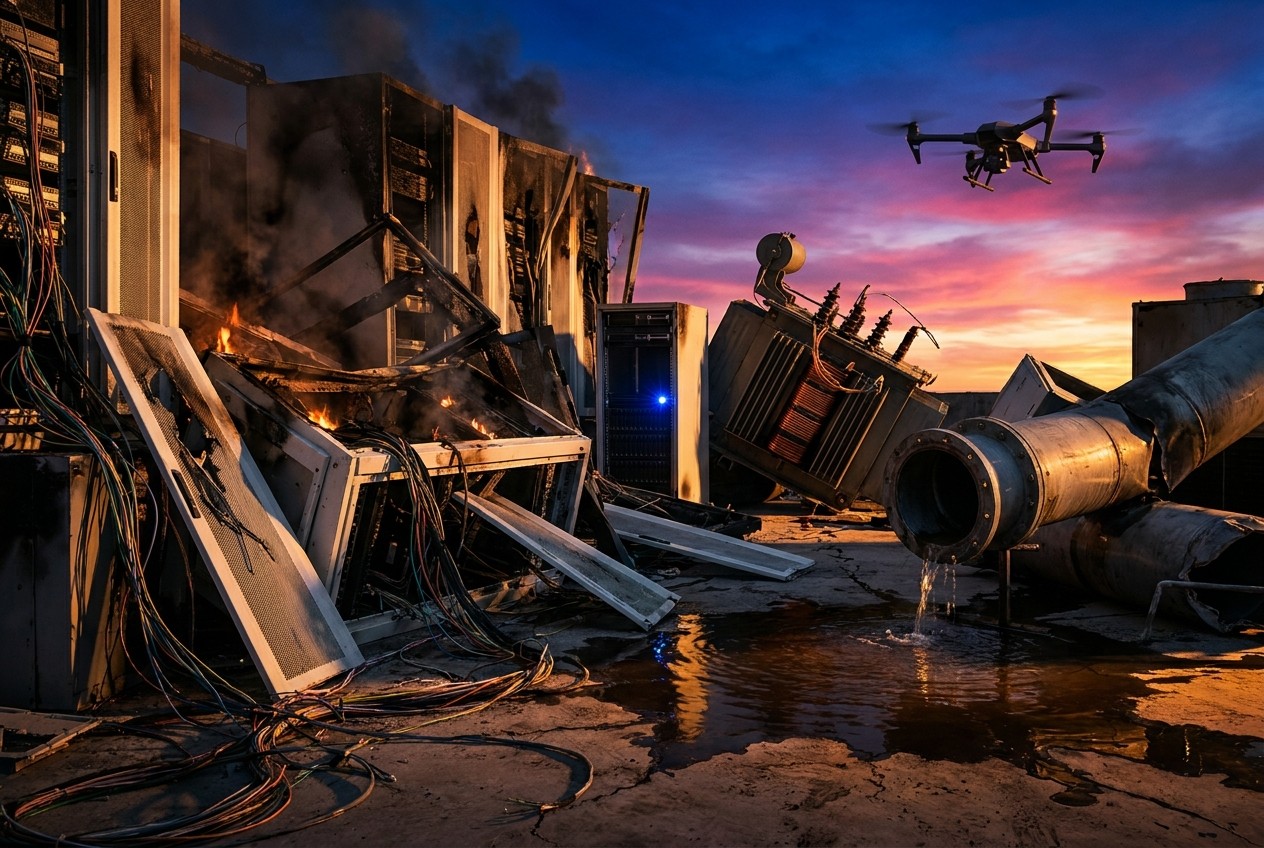
Damage and Timeline: March and April Attacks
Iranian drone attacks in March set fires, damaged infrastructure and forced authorities to cut power at AWS sites in the UAE and Bahrain, according to reports. Water used to extinguish the fires caused additional damage, the accounts stated. The first confirmed strike on a commercial data center occurred in early March when unidentified objects struck an AWS facility in the UAE, triggering a fire and cascading service outage [2]. Bahrain's interior ministry said civil defense teams were "extinguishing a fire in a facility of a company as a result of the Iranian aggression," according to the Financial Times [3]. After the March attacks, Amazon recommended customers migrate data to other regions, including the U.S. and Europe. Most did so before fresh Iranian strikes again hit AWS facilities in Bahrain in April, according to the company. The Islamic Revolutionary Guard Corps (IRGC) announced Phase 3 of Operation Sadegh Promise 4, resulting in a strike on an AWS cloud data center in Bahrain [4].Scope of Loss: Bahrain and UAE Availability Zone
Data exclusively stored in AWS data centers across Bahrain is beyond restoration, AWS said. One AWS availability zone in the UAE – a group of data centers with independent power, cooling and networking infrastructure – shares the same fate, according to the announcement. "A cloud region losing customer data because of an airstrike – I don't think that's ever happened before," said Doug Madory, head of internet analysis at cybersecurity firm Infoblox. "I just don't think that they try to build these facilities to survive missile strikes," Madory also said. The attacks marked the first time commercial cloud infrastructure has been deliberately targeted in a military conflict [5]. The strikes disrupted banking, food delivery and enterprise software services across the Gulf, raising concerns about the vulnerability of global technology infrastructure in geopolitical conflicts, according to the accounts [5].Regional and Industry Implications for Gulf Data Ambitions
The attacks, monthslong AWS data center blackouts and permanent data loss pose a setback for Arab Gulf states seeking to become world-leading data processors for industries such as artificial intelligence, officials and analysts said. They add a significant new risk for U.S. companies weighing investments that can cost tens of billions of dollars. To address concerns about strikes, Emirati officials have floated building data centers underground and placing drone defense systems near computing centers, both of which would add to the enormous cost, the Wall Street Journal reported Monday, Sept. 14. The IRGC in the spring threatened American tech companies it accused of contributing to attacks on Iran, naming Microsoft, Oracle, Alphabet and Nvidia, according to the report. The targeting of Amazon and Microsoft in these operations underscores a new escalation: commercial data centers no longer appear to be off-limits [6]. The massive infrastructure investments covered in accounts of America's corporate giants reflect how deeply cloud services have become embedded in the global economy [7]. Cloud computing relies on virtualization, in which software-based representations of computers draw on allocated portions of CPU, memory, and storage from physical servers in data centers [8]. That architecture assumes facilities remain operational – an assumption the Gulf strikes have now tested.Company Commitments and Next Steps
"We have supported the remaining customers in re-establishing their operations in alternate regions, using backups where available or implementing alternative solutions to mitigate the impact of inaccessible data," Amazon said in its Tuesday update. Some tech companies are moving ahead with Gulf data-center projects, betting the war will end and drawn to Gulf capital; Amazon and Microsoft separately said last month they would still launch data centers in Saudi Arabia by the end of the year. Microsoft struck a deal for a 200-megawatt data center in Abu Dhabi in late 2025, and construction is under way, the report stated. "We remain committed to supporting our customers in Bahrain in the long term and will share a further update in early 2027," AWS said in its Tuesday announcement. The permanent loss of customer data from a military strike represents an unprecedented event in the history of commercial cloud computing, according to industry analysts.References
- ZeroHedge.com. "Amazon Says Cloud Infrastructure In Bahrain, UAE 'Beyond Saving'". 2026.
- NaturalNews.com. "The digital battlefield arrives First ever drone strike on commercial data center occurs in UAE". 2026.
- ZeroHedge.com. "Amazon's Cloud Unit In Bahrain 'Disrupted' By Iranian Strike". 2026.
- Brighteon.com. "IRGC announces Phase 3 of Operation Sadegh Promise 4 - strike on Amazon Web Services cloud data center in Bahrain". 2026.
- NaturalNews.com. "Iran's drone strikes on Amazon data centers signal new era of cyber-physical warfare". 2026.
- ZeroHedge.com. "Data Center Hunter: Iran Expands Drone Target List, From AWS To Microsoft Facilities". 2026.
- Brian Dumaine. "Bezonomics".
- Sam Ghosh And Subhasis Gorai. "The Age of Decentralization".
Explainer Infographic


The Era of Token Abundance Is Coming — and It Will Make Civilization Almost Unrecognizable
By Mike Adams // Share
U.K. and U.S. forge landmark AI defense partnership to shield critical infrastructure
By Willow Tohi // Share

Trump: U.S. and Iranian Officials Hold Three-Hour Meeting at UN Sidelines
By Garrison Vance // Share

U.S., Denmark, Greenland Sign “Forever” Arctic Security Deal
By Morgan S. Verity // Share

Alibaba Unveils Zhenwu V900 AI Chip, Plans $53 Billion Infrastructure Push
By Edison Reed // Share
U.S. Prepares Sweeping Sanctions to Dismantle ICC, Report Says
By Douglas Harrington // Share

Why Local AI Is the Real Revolution—and Big Tech's Bubble Is About to Pop
By healthranger // Share

The MAHA Mirage: Why I'm Done Waiting for Political Saviors To Keep Their Promises
By healthranger // Share

Trump Just Begged Putin for a Diesel Bailout: The Energy Crisis Is Here and It's Going to Get Worse
By healthranger // Share

Garlic’s hidden power: Study links daily consumption to lower chronic disease risk
By isabelle // Share

Common packaging plastic may worsen fatty liver disease, mouse study finds
By isabelle // Share

Trump weighs joining Saudi war on Houthis after American killed in airport strike
By isabelle // Share