 Parler
 Gab
Gab Copy
Copy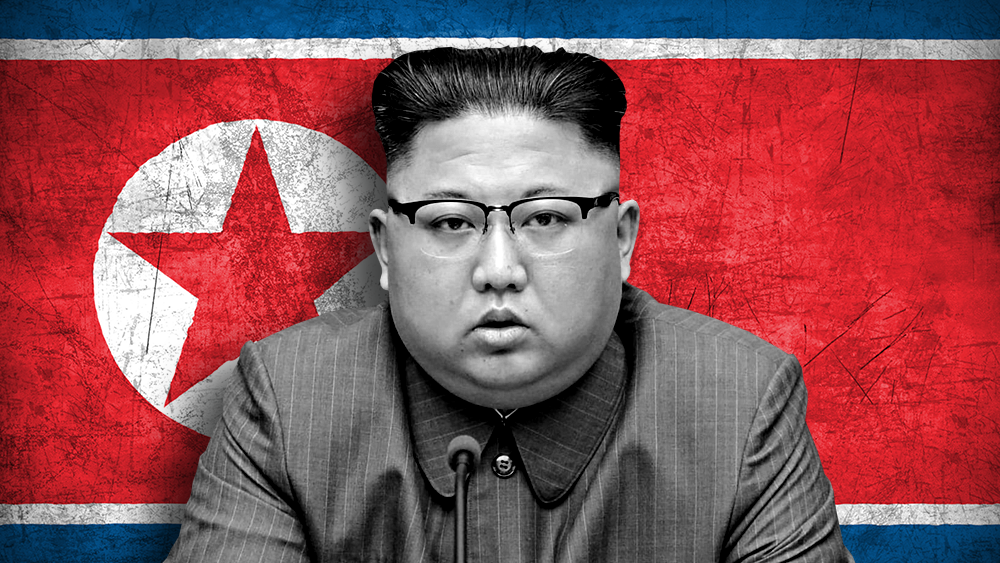
- Kim Jong Un pledged "invariable support" for Russia and called the Ukraine war "sacred" in a letter to Putin marking North Korea's 78th founding anniversary.
- South Korean intelligence estimates that North Korean combat losses fighting for Russia have climbed from roughly 2,000 dead to as many as 6,000 killed or wounded.
- Kyiv claims up to 50,000 additional North Korean troops could be deployed to Russia, though it has offered no evidence.
- Ukrainian President Volodymyr Zelensky is pressing South Korea to supply air defense systems, a request Seoul has not answered.
- The alignment reflects a broader pattern of North Korea trading manpower and munitions for Russian economic aid and military technology.
A blood-for-technology arrangement
The relationship between Pyongyang and Moscow did not spring from ideological brotherhood alone. Since the launch of Russia's special military operation in Ukraine back in February 2022, the two governments have built a transactional alliance, one where North Korean soldiers and artillery shells flow toward the Russian front lines in exchange for hard currency, food, fuel, and access to weapons technology Pyongyang has long coveted. That technology reportedly includes assistance for missile guidance and satellite systems, capabilities North Korea has struggled to perfect on its own for decades under international sanctions. In plain terms, Kim is renting out his army and his munitions stockpiles to underwrite his own military modernization, using Ukrainian soil as the proving ground. The human cost of that arrangement has been staggering and largely hidden from Western headlines until South Korean intelligence began releasing casualty estimates. What was once pegged at roughly 2,000 North Korean dead has now, according to a more recent assessment, swelled to approximately 6,000 killed or wounded. These are conscripts from one of the most isolated nations on earth, thrown into a meat-grinder war thousands of miles from home to prop up a foreign patron's territorial ambitions, while state media at home frames their sacrifice as sacred duty. Kyiv's claim that Pyongyang may send as many as 50,000 additional troops, though unverified and offered without supporting evidence, has nonetheless rattled Western capitals and given Ukrainian officials fresh leverage in their appeals for outside help.Seoul caught between two wars
That leverage is now being aimed squarely at South Korea. President Volodymyr Zelensky has invoked the specter of expanded North Korean involvement to press Seoul for air defense systems capable of shielding Ukrainian cities from Russian missile barrages. So far, South Korea has declined to provide this aid directly. For one, arming Ukraine with lethal weaponry risks provoking exactly the kind of escalatory spiral Zelensky is implicitly warning against, one in which North Korean forces gain combat experience and hardened battlefield doctrine that could later be turned against South Korea itself. Every soldier Kim sends to the Russian front returns home, if he returns at all, having learned how modern drone warfare and artillery coordination actually function on a live battlefield. A former US ambassador to Poland has suggested that Moscow is using this entire dynamic to test Western resolve and make Ukraine's backers feel personally exposed - a strategy that appears to be working. The pressure campaign aimed at Seoul is a case study in how a war advertised as regional and contained keeps expanding its cast of participants, drawing in supply chains, technology transfers, and now the divided halves of a peninsula that has spent seventy years in an uneasy truce. What the mainstream coverage of Kim's letter tends to omit is the broader picture: a war economy has formed around the Ukraine conflict, one that rewards client states for their willingness to supply expendable manpower and rearms authoritarian governments with technology they could not otherwise obtain. North Korea has become a global arms and labor market built on the backs of soldiers whose deaths barely register outside intelligence briefings, while the diplomatic language of "sacred war" and "invariable support" launders the transaction into something resembling brotherhood. This war in Ukraine is not coming to a swift close. It continues to expand as Russia takes territory and drags its allies further into the mix. Sources include: SputnikGlobe.com KyivPost.com TheOWP.org
U.S. Prepares Sweeping Sanctions to Dismantle ICC, Report Says
By Douglas Harrington // Share

Nvidia CEO Jensen Huang Rejects AI Extinction Claims
By Edison Reed // Share

Report Says Glyphosate Detected in Uterine Tissue of Women with Aggressive Cancer
By Morgan S. Verity // Share

UK sends refuelling plane to Saudi Arabia as Houthi advance threatens global oil routes
By Cassie B. // Share

EU-Backed Coalition Seeks Role in Global AI Governance as Major Powers Hold Back
By Chase Codewell // Share

Super El Niño Ties Record Months Before Peak; Scientists Warn of Severe Global Impacts
By Douglas Harrington // Share

Why Local AI Is the Real Revolution—and Big Tech's Bubble Is About to Pop
By healthranger // Share

The MAHA Mirage: Why I'm Done Waiting for Political Saviors To Keep Their Promises
By healthranger // Share

Trump Just Begged Putin for a Diesel Bailout: The Energy Crisis Is Here and It's Going to Get Worse
By healthranger // Share

Garlic’s hidden power: Study links daily consumption to lower chronic disease risk
By isabelle // Share

Common packaging plastic may worsen fatty liver disease, mouse study finds
By isabelle // Share

Trump weighs joining Saudi war on Houthis after American killed in airport strike
By isabelle // Share