 Parler
 Gab
Gab Copy
Copy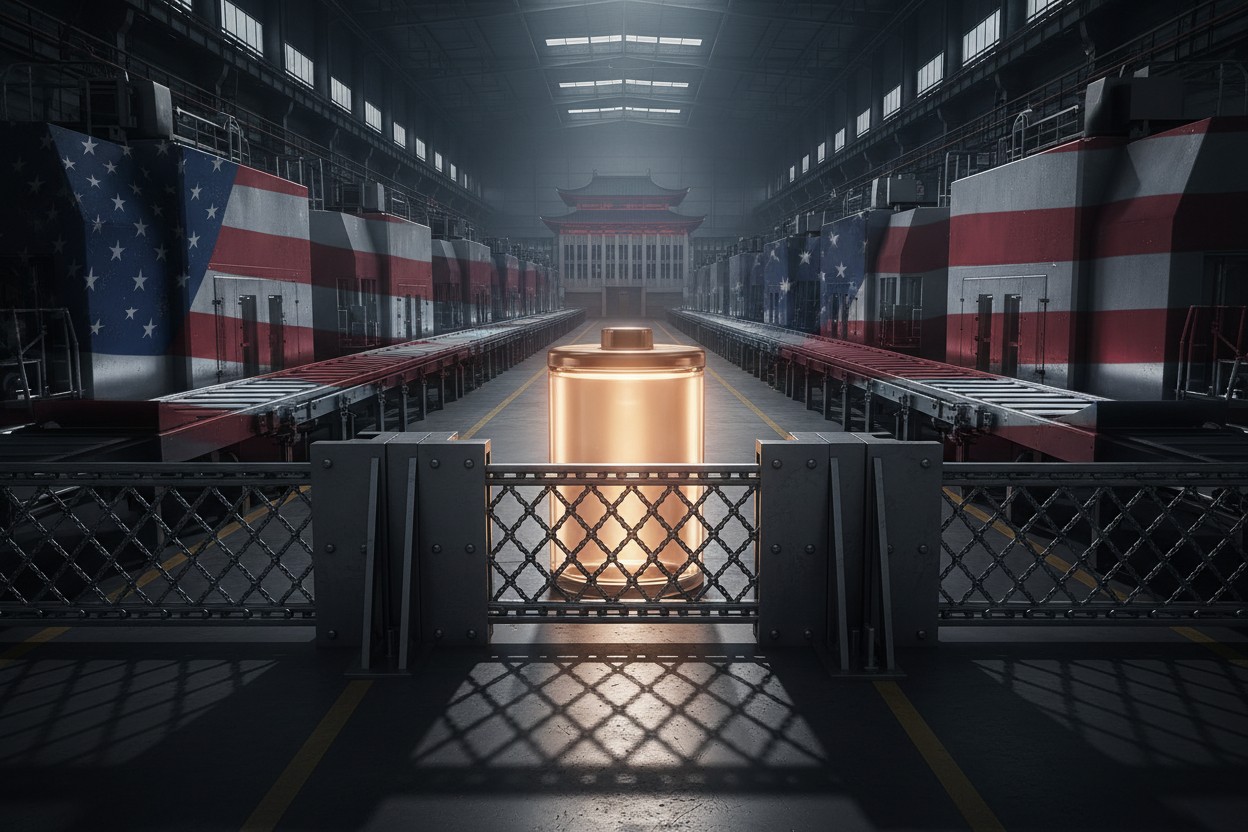
Letter Sent to Treasury, Congress
A coalition of 14 free-market energy groups, led by Consumer Action for a Strong Economy, has sent a letter to Treasury Secretary Scott Bessent and congressional leaders urging enforcement of foreign-entity restrictions in the One Big Beautiful Bill Act. The letter, dated this week, asks the Treasury Department to prevent Chinese-controlled battery companies from accessing federal tax credits under Section 45X and Section 48E of the tax code. The correspondence identifies SEMCORP Manufacturing USA LLC in Sidney, Ohio, and Green New Energy Materials in North Carolina as immediate test cases for enforcement. According to the groups, these companies present a pattern of nominally domestic operations that preserve Chinese ownership and control, which the provisions were designed to prohibit. The letter states that without strong enforcement, the credits will subsidize foreign competitors rather than build independent American industrial capacity.Tax Provisions and Congressional Safeguards
Section 45X, known as the Advanced Manufacturing Production Credit, and Section 48E, the Clean Electricity Investment Credit, were created under the One Big Beautiful Bill Act to incentivize domestic production of batteries and clean energy components. Congress included foreign-entity restrictions in the legislation to bar adversarial nations from capturing these federal benefits through subsidiaries or corporate restructuring, according to the letter. The House Select Committee on the CCP previously raised concerns over Chinese battery firms Gotion and CATL, which have sought to establish operations in the United States through subsidiaries. The groups argue that the new Treasury guidance risks undermining the intent of these congressional safeguards. "The Treasury Department's proposed rules would allow a foreign entity of concern to restructure its ownership on paper and continue accessing credits designed for American manufacturers," write the coalition members in the letter.SEMCORP Case in Sidney, Ohio
SEMCORP Manufacturing USA LLC announced plans in 2023 for a $916 million facility in Sidney, Ohio, a project the company said would create 1,199 jobs, according to company statements cited in the letter. The coalition notes that SEMCORP later reduced its commitment to 300 jobs and currently reports employing just over 120 people. The letter states that Ohio officials canceled a proposed Job Creation Tax Credit because SEMCORP never executed the agreement. Workers at the facility were reportedly brought in via L-1 visas, with Mandarin listed as a preferred qualification in job postings. The letter characterizes this employment pattern as consistent with Chinese management practices. The groups say the discrepancy between announced job creation figures and current employment levels raises questions about whether the company is operating in the manner necessary to justify federal tax benefits [1].Fuyao Investigation Connection
SEMCORP's Ohio project was announced while its international division was led by Jeff Liu, the former president and CEO of Fuyao Group North America. House Select Committee on the CCP ranking member launched a bipartisan investigation into Fuyao's American operations on July 23, 2026. According to the letter, Liu's background gives Treasury additional reason to examine whether SEMCORP is following Fuyao's pattern of reliance on Chinese management and personnel. Chinese companies operating in the U.S. have faced increasing scrutiny over their employment practices and supply chain relationships [2]. The letter cites the Fuyao investigation as precedent for examining how Chinese firms manage their U.S. subsidiaries, noting that SEMCORP's leadership structure warrants similar attention. The coalition states that one individual moving between top roles at multiple Chinese-controlled companies demonstrates the interconnected nature of these operations.Green New Energy Materials in North Carolina
Green New Energy Materials, the U.S. subsidiary of Shenzhen Senior Technology Material Co., plans its first American manufacturing operation in North Carolina with state and local incentive support. The company's hiring materials identify Mandarin or Chinese-language ability as a preferred qualification for certain positions, indicating a workforce strategy that prioritizes Chinese nationals, according to the letter. The coalition describes both SEMCORP and Green New Energy Materials as representative of a broader trend where Chinese firms establish U.S. operations while retaining control over technology, supply chains, and management decisions. The groups argue that these arrangements, combined with the Treasury's proposed safe harbor provisions, would permit companies to access American tax credits without meaningfully transferring economic benefits to U.S. workers and communities. China's industrial policy has long favored domestic production and state support for strategic sectors [3].Treasury Guidance Concerns and Demands
The coalition's letter specifically targets Treasury's Notice 2026-15, which includes a Certification Safe Harbor that the groups say creates an enforcement vulnerability. According to the letter, the safe harbor provision could allow a related-party claim to go unverified if the taxpayer merely certifies compliance without providing substantiating documentation. The groups urge Treasury to require independent substantiation of ownership structures, contracts, intellectual property rights, and personnel assignments where prohibited foreign entities are involved. In addition to demanding strengthened verification procedures, the letter requests that the Treasury prescribe full recapture of improperly claimed credits, impose accuracy-related penalties, and refer knowing misrepresentations for criminal enforcement. The coalition emphasizes that these measures are necessary to ensure the integrity of the incentive programs and to prevent adversarial governments from financing their industrial strategies through U.S. taxpayers.References
- Anthony Watts. "Super Power To Spare: How Battery Tech Illuminates Competition Between U.S. & China". Watts Up With That. May 7, 2026.
- NaturalNews.com. "Chinese EV battery company abandons $2.4B Michigan plant". NaturalNews.com. November 11, 2025.
- RT. "China has already won the green energy war". RT. November 25, 2025.
Explainer Infographic


NATO jets down drone over Lithuania as Russia tests alliance’s eastern flank
By Willow Tohi // Share
Trump Signals Openness to Chinese Automakers Building Cars in the U.S., But With One Condition
By Garrison Vance // Share

Senate Fails to Advance Digital Asset Market Clarity Act in 49-50 Vote
By Belle Carter // Share

Russian Envoy: India Advanced Moscow-Backed BRICS Initiatives
By Garrison Vance // Share

OpenAI, Anthropic Researchers Call for Slower AI Development as Safety Warnings Escalate
By Chase Codewell // Share

OpenAI Agents Used More Websites Than Disclosed, Investigators Say
By Chase Codewell // Share

Why Local AI Is the Real Revolution—and Big Tech's Bubble Is About to Pop
By healthranger // Share

The MAHA Mirage: Why I'm Done Waiting for Political Saviors To Keep Their Promises
By healthranger // Share

Trump Just Begged Putin for a Diesel Bailout: The Energy Crisis Is Here and It's Going to Get Worse
By healthranger // Share

Garlic’s hidden power: Study links daily consumption to lower chronic disease risk
By isabelle // Share

Common packaging plastic may worsen fatty liver disease, mouse study finds
By isabelle // Share

Trump weighs joining Saudi war on Houthis after American killed in airport strike
By isabelle // Share