 Parler
 Gab
Gab Copy
Copy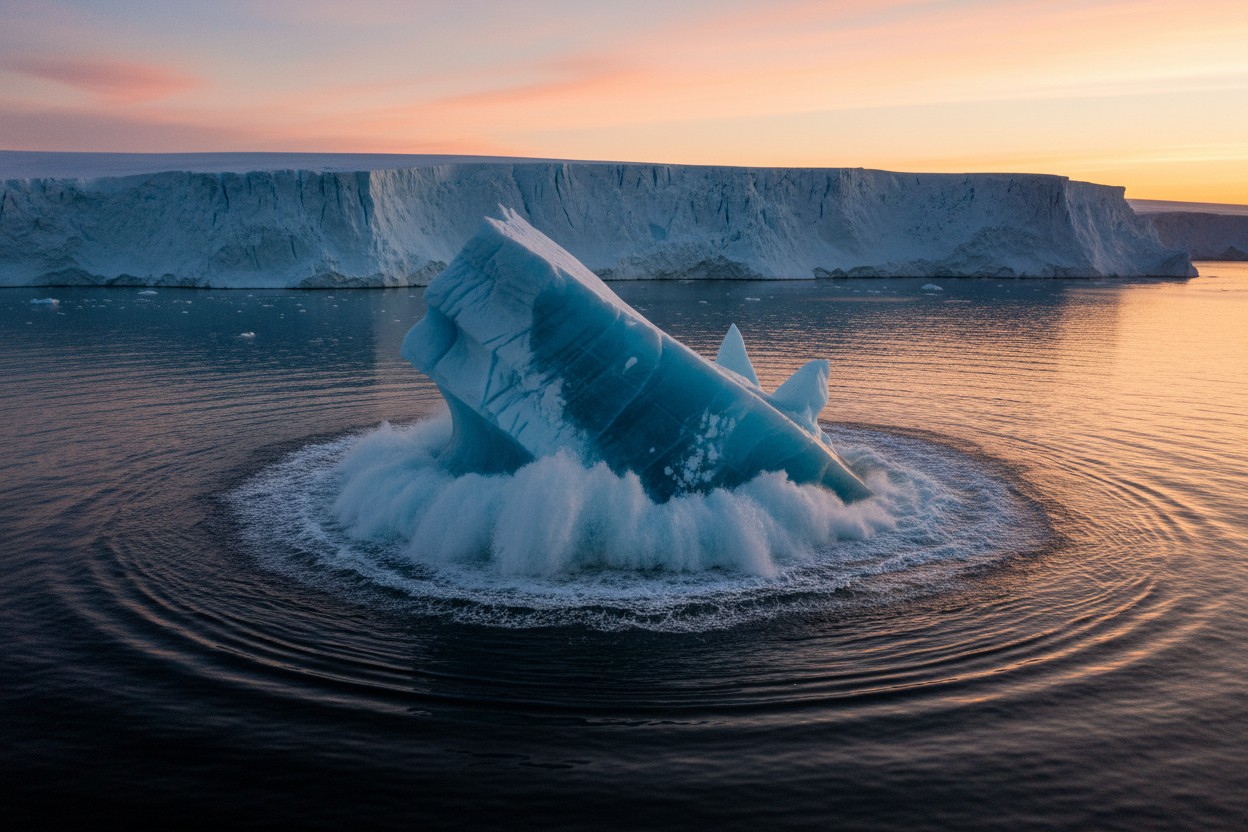
What are glacial earthquakes?
Glacial earthquakes are a special type of seismic event generated in cold regions, according to the study materials. They occur when tall, thin icebergs calve off glaciers into the ocean and, upon capsizing, collide violently with the parent glacier. This clash generates strong mechanical ground vibrations, or seismic waves, that can propagate thousands of kilometers from the origin point. These events are unique because they lack high-frequency seismic waves that are vital for detecting standard seismic sources such as earthquakes and volcanoes. Because of this, glacial earthquakes were only discovered relatively recently, despite other seismic sources being documented for decades. First identified in the Northern Hemisphere more than 20 years ago, most known events have been located near glacier fronts in Greenland, where the largest are comparable in size to nuclear tests. According to the report, these Greenland events occur more often in late summer.Detection and findings
Pham explained that previous attempts to detect Antarctic glacial earthquakes relied on the worldwide network of seismic detectors. His new study instead used seismic stations located within Antarctica itself, according to the report. This approach allowed for the detection of lower-magnitude events that may have been previously overlooked by the global network. The search identified more than 360 glacier seismic events, most of which are not yet included in any earthquake catalog, the study stated. The events were detected in two clusters, near the Thwaites and Pine Island glaciers. The report identifies these glaciers as the largest sources of sea-level rise from Antarctica. Ice losses from Thwaites Glacier specifically are currently responsible for roughly four percent of global sea-level rise [1]. While the Thwaites events are likely caused by capsizing icebergs, Pham noted that the second cluster near Pine Island Glacier presents a different case. These events were consistently located 60 to 80 kilometers inland from the waterfront, according to the study. Pham stated in the report that these events are not likely to have been caused by capsizing icebergs and remain puzzling, requiring follow-up research.Thwaites activity and possible causes
The study found that the most prolific period for glacial earthquakes at Thwaites, from 2018 to 2020, coincided with a period of accelerated flow of the glacier’s ice tongue toward the sea. The report states that this ice-tongue speed-up period was independently confirmed by satellite observations. This finding suggests that the events may not be driven by the annual oscillation of warm air temperatures, which drives seasonal behavior at Greenland glaciers. Pham stated in the article that the ice-tongue speed-up “could have been caused by ocean conditions,” the effect of which is not yet well understood. He suggests the findings point to the impact of short-term ocean states on the stability of marine-terminating glaciers. This connection is worth further exploration to assess the glacier’s potential contribution to future sea-level rise, according to the study. The report also notes that scientists warn the ice shelf holding back Thwaites is eroding from below due to higher ocean temperatures [2].Implications and next steps
The detection of glacial earthquakes associated with iceberg calving at Thwaites Glacier could help answer fundamental research questions, according to Pham. These include questions about the potential instability of the glacier due to the interaction of ocean, ice, and solid ground near the grounding line where the glacier meets the sea. Better understanding of these interactions may hold the key to resolving the uncertainty in projected sea-level rise over the next couple of centuries. Pham noted that an improved understanding of these processes could reduce “the current large uncertainty in projected sea-level rise over the next couple of centuries.” The research suggests that further exploration into the role of ocean conditions on glacier stability is warranted. The Pine Island and Thwaites glaciers together hold enough ice to contribute a meter of sea-level rise to the world’s oceans, according to one analysis [3].References
- NaturalNews.com. "High geothermal heat beneath West Antarctica glacier responsible for its melting". NaturalNews.com. August 27, 2021.
- ChildrensHealthDefense.org. "Antarcticas Doomsday Glacier Could Shatter Wi". ChildrensHealthDefense.org.
- Flannery Tim F Tim Fridtjof 1956- author. "Atmosphere of hope searching for solutions to the climate crisis".
Explainer Infographic


Movement medicine: How daily activity slashed uncontrolled blood pressure by 69% in new study
By Willow Tohi // Share

Research Outlines Methods for Recovering From Technology-Related Stress
By Coco Somers // Share

Study Links Fat in Thigh Muscles to Higher Risk of Death and Chronic Disease
By Petra Stone // Share

White Martian rocks point to a life-friendly past, scientists say
By Jacob Thomas // Share

Berberine Review Connects Metabolic Effects to Gut Health
By Coco Somers // Share

Morning Walks Linked to Sleep, Energy, and Other Health Benefits, Reports Say
By Edison Reed // Share

Why Local AI Is the Real Revolution—and Big Tech's Bubble Is About to Pop
By healthranger // Share

The MAHA Mirage: Why I'm Done Waiting for Political Saviors To Keep Their Promises
By healthranger // Share
Trump Just Begged Putin for a Diesel Bailout: The Energy Crisis Is Here and It's Going to Get Worse
By healthranger // Share

Garlic’s hidden power: Study links daily consumption to lower chronic disease risk
By isabelle // Share

Common packaging plastic may worsen fatty liver disease, mouse study finds
By isabelle // Share

Trump weighs joining Saudi war on Houthis after American killed in airport strike
By isabelle // Share