 Parler
 Gab
Gab Copy
Copy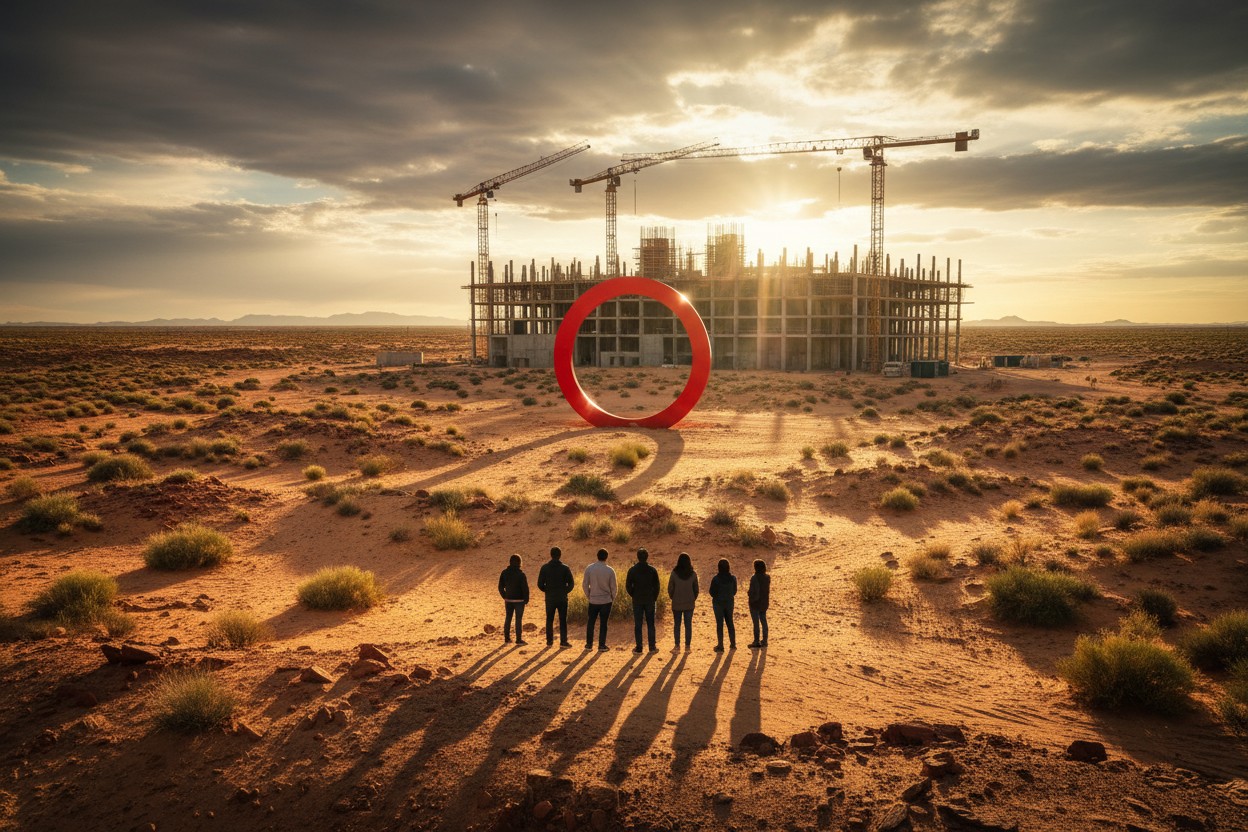
Project Background and Appeal
The Townsite Data Center was slated to become the first private data center built on federal public land in the United States, according to Sen. Edward Markey (D-MA). "In June 2026, the Bureau of Land Management approved the Townsite Data Center project to construct, operate, and maintain a data center on 88.5 acres of public land," Markey stated on Facebook [1]. The approval was notable because it was granted under a Right-of-Way permit originally issued for a solar energy project, a maneuver that critics argue bypassed standard environmental review processes. The Center for Biological Diversity, the Sierra Club Toiyabe Chapter, and a group of Boulder City residents filed the formal appeal that led to the stay. The appellants argued that the BLM's approval was unlawful because the agency relied on a previous solar project's environmental analysis rather than conducting a project-specific review for the data center. This procedural distinction became the central issue in the case, according to the Board's ruling.IBLA Decision and Legal Rationale
In its decision, the IBLA ruled that the appeal was "likely to succeed on the merits," a legal threshold that justified the immediate halt to construction. Officials said the decision rested on the appellants' demonstration that the administration lacked the authority to bypass a project-specific environmental review under the National Environmental Policy Act. The Board's finding suggests that the BLM's reliance on the earlier solar permit analysis was legally insufficient for a project of this scale and type. The ruling does not represent a final judgment on the merits of the case, according to the Board. Rather, it pauses activity to preserve the status quo while the broader legal questions are considered. The order effectively freezes all construction and site preparation work on the 88.5-acre parcel until the appeal is resolved. This administrative stay is a common but significant remedy in federal land-use disputes, according to legal observers.Reactions from Groups and Residents
Patrick Donnelly, Nevada state director for the Center for Biological Diversity, called the ruling a "tremendous victory" for local communities and environmental oversight. "Communities can fight back against this rush to industrialize our public lands," Donnelly said in a statement following the decision. He characterized the outcome as a direct check on the federal government's push to expedite data center development across the West. Olivia Tanager of the Sierra Club Toiyabe Chapter said the ruling "is a victory for democracy and public participation," emphasizing that the appeal process functioned as intended. Boulder City resident Brynn deLorimier, one of the individual appellants, expressed gratitude for the Board's decision, stating it protects the community's interests and the surrounding desert environment. The groups have pledged to continue their legal challenge through the full appeals process.Implications for Future Data Center Proposals
The IBLA ruling could establish a precedent for other data center proposals on public lands in Nevada and across the West, according to legal experts. The decision signals that federal agencies must conduct rigorous, project-specific environmental reviews before approving large-scale industrial facilities, rather than relying on analysis prepared for unrelated earlier projects. This requirement may slow the pace of proposals that have been fast-tracked under recent federal policy directives [2]. According to the Bureau of Land Management, several other data center proposals on federal land are currently under consideration. The order issued this week ensures those proposals will face similar scrutiny during the approval process. The ruling reflects a broader pattern of public resistance to data center expansion, which has drawn opposition over concerns about electricity consumption, water use, and community impacts [3].References
- 100percentfedup.com. "First Private Data Center Approved On Public Land – Democrat Senator Alleges." July 29, 2026.
- NaturalNews.com. "Data Center Expansion Targets Native American Lands, Sparking Tribal Resistance." July 12, 2026.
- TheNewAmerican.com. "Warning! AI Data Center Promoters Are Lying to Stop Our Opposition!" July 2, 2026.
- St Clair, Jeffrey. "Been brown so long it looked like green to me the politics of nature."
- Latex104. "Lessons from the Expansion of the National Training Center at Fort Irwin." Federal Facilities Environmental Journal 39, Spring 2002.
Explainer Infographic


Microsoft Publishes Windows Age Verification API Documentation
By Douglas Harrington // Share

Trump’s Oil Holdings Gain Millions Amid Iran War As Accounts Continue Trading
By Garrison Vance // Share
Maryland’s green energy mandates are driving a 50.9% spike in electric bills
By Cassie B. // Share

Study Links Dry-Cleaning Chemical Exposure to Triple Risk of Liver Scarring
By Iva Greene // Share

Trump Predicts Iran War Will End “Immediately” After November Midterms
By Garrison Vance // Share

Trump Predicts Nosedive on Oil and Gas Prices “Right After” Midterm Elections
By Garrison Vance // Share

Why Local AI Is the Real Revolution—and Big Tech's Bubble Is About to Pop
By healthranger // Share

The MAHA Mirage: Why I'm Done Waiting for Political Saviors To Keep Their Promises
By healthranger // Share

Trump Just Begged Putin for a Diesel Bailout: The Energy Crisis Is Here and It's Going to Get Worse
By healthranger // Share

Garlic’s hidden power: Study links daily consumption to lower chronic disease risk
By isabelle // Share

Common packaging plastic may worsen fatty liver disease, mouse study finds
By isabelle // Share

Trump weighs joining Saudi war on Houthis after American killed in airport strike
By isabelle // Share