 Parler
 Gab
Gab Copy
Copy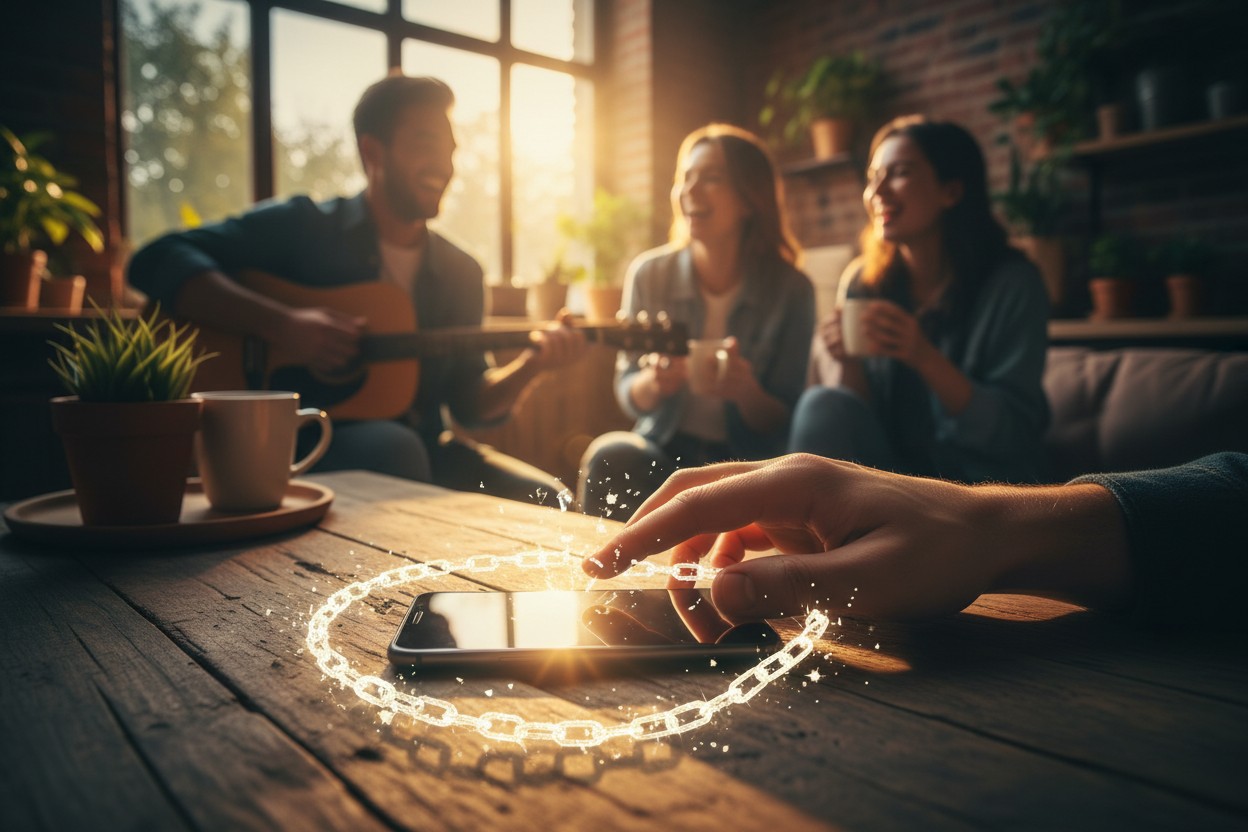
The Habit Loop and Reward System
People commonly reach for their phones during moments of boredom, loneliness, or uncertainty, according to Dr. Judson Brewer. Over time, the brain associates these emotional states with the quick relief a screen provides, making the behavior automatic. "Detoxes treat the screen as the problem and abstinence as the solution," Brewer said, "But habits aren't really about the substance. They're about the reward-based learning loop underneath." This reward-based loop is linked to dopamine, a neurotransmitter central to focus and motivation. "The Dopamine Code: Unlock Your Brain's Natural Potential Without Drugs" warns that social media algorithms and sedentary lifestyles disrupt dopamine, leading to addiction cycles and symptoms resembling ADHD [1]. Similarly, author Damon Zahariades explains that digital activities like texting or browsing "prompts the release of dopamine, flooding the brain" [3]. Consequently, willpower alone is insufficient when the brain has been conditioned to expect a neurological payoff from every notification.Environmental Cues and Self-Binding
Returning to a screen-saturated environment re-triggers established habits. Notification pop-ups, vibrating phones, and autoplay videos do not merely remind users to check their devices; they continually reinforce the behavior, according to specialists. "Like Pavlov's dogs, we're salivating in response to addictive cues and then having to exert enormous willpower to resist," said Dr. Anna Lembke, medical director of addiction medicine at Stanford University School of Medicine. She noted that these cues "themselves release dopamine in the brain's reward pathway, making it that much more difficult to abstain." Dr. Lembke recommends a strategy called "self-binding," which involves creating physical barriers between a person and their compulsive behaviors. Practical steps include charging phones outside the bedroom, removing social media apps from the home screen, and establishing device-free spaces for meals and sleep. "We need to create a world within our dopamine-overloaded world that insulates us from the constant triggers to use," Lembke said. Author Tanya Goodin similarly suggests setting time boundaries, such as switching devices off at 10 p.m. or designating screen-free Sundays, and placing screens out of sight to avoid inadvertent use [4].Strategies for Long-Term Change
Dr. Brewer suggests that individuals approach their screen urges with curiosity rather than resistance. By paying non-judgmental attention to the expected reward of scrolling—and comparing it to the actual outcome—users often find the experience less satisfying than predicted. "That mismatch between expected and actual reward is what updates the learning," Brewer said, noting that the habit's grip loosens "not through force but through clearer seeing." Dr. Clifford Sussman, a developmental psychiatrist specializing in internet gaming disorder, advises filling the void left by screens with activities that are socially engaging and physically present. His unconventional advice for some patients is to join a rock band, an activity that requires putting the phone down. The goal, he said, is to find alternatives that compete with the passive ease of scrolling, such as sports leagues, volunteering, or cooking with friends. Support from family and peers is critical for sustaining change. "The people around you have to know that this is a struggle," Sussman said, "Otherwise you're going right back into the same environment." Parents can model desired habits by setting shared boundaries like device-free meals. This aligns with research showing that a one-week social media fast reduces depression and anxiety symptoms in young adults, though it does not alleviate feelings of loneliness, highlighting the need for real-world connection [2]. Zahariades also notes that face-to-face interaction triggers dopamine release, providing the social bonding that digital interactions replace [3].Conclusion: Relapse Is Part of the Process
Relapse into old screen habits is a common part of behavior change, according to Dr. Sussman. "Relapse is part of behavior change," he said, "The important thing is understanding what triggered it and how quickly you recover." He emphasized that a dramatic weekend detox is not a permanent fix; rather, lasting change develops through gradual adjustments, greater awareness, and supportive environments. The objective is not to eliminate phones from daily life but to ensure they are no longer the automatic response to every empty moment. Experts agree that sustained improvement comes from repeated course corrections, not a single period of abstinence. As author Damon Zahariades writes, regaining focus requires purging distractions entirely rather than merely reducing exposure [5].References
- Ramon Tomey. "The Dopamine Code: The Silent War on Kids' Brains". NaturalNews.com. April 16, 2026.
- NaturalNews.com. "The Digital Reset: How a One-Week Social Media Fast Rewires Well-being". NaturalNews.com. January 28, 2026.
- Damon Zahariades. "Digital Detox: The Ultimate Guide To Beating Technology Addiction, Cultivating Mindfulness, and Enjoying More Creativity".
- Tanya Goodin. "Off: Your Digital Detox for a Better Life". 2018.
- Damon Zahariades. "Digital Detox: The Ultimate Guide To Beating Technology Addiction, Cultivating Mindfulness, and Enjoying More Creativity".
Explainer Infographic


Just 5 minutes of brisk walking can sharpen your brain, study finds
By Willow Tohi // Share

Pentagon, HHS Investigating Possible Link Between COVID Vaccines and Military Deaths
By Belle Carter // Share

The Faraday ballistic shield backpack: Essential emergency protection for the modern world
By HRS Editors // Share

Aerobic Exercise Linked to Improved Executive Function After Menopause, Study Finds
By Petra Stone // Share

Exercise Shows Protective Effect Against Common Eye Diseases, Eye Specialists Report
By Morgan S. Verity // Share

Study Links Kombucha Consumption to Lower Blood Pressure
By Coco Somers // Share

Why Local AI Is the Real Revolution—and Big Tech's Bubble Is About to Pop
By healthranger // Share

The MAHA Mirage: Why I'm Done Waiting for Political Saviors To Keep Their Promises
By healthranger // Share

Trump Just Begged Putin for a Diesel Bailout: The Energy Crisis Is Here and It's Going to Get Worse
By healthranger // Share

Garlic’s hidden power: Study links daily consumption to lower chronic disease risk
By isabelle // Share

Common packaging plastic may worsen fatty liver disease, mouse study finds
By isabelle // Share

Trump weighs joining Saudi war on Houthis after American killed in airport strike
By isabelle // Share