 Parler
 Gab
Gab Copy
Copy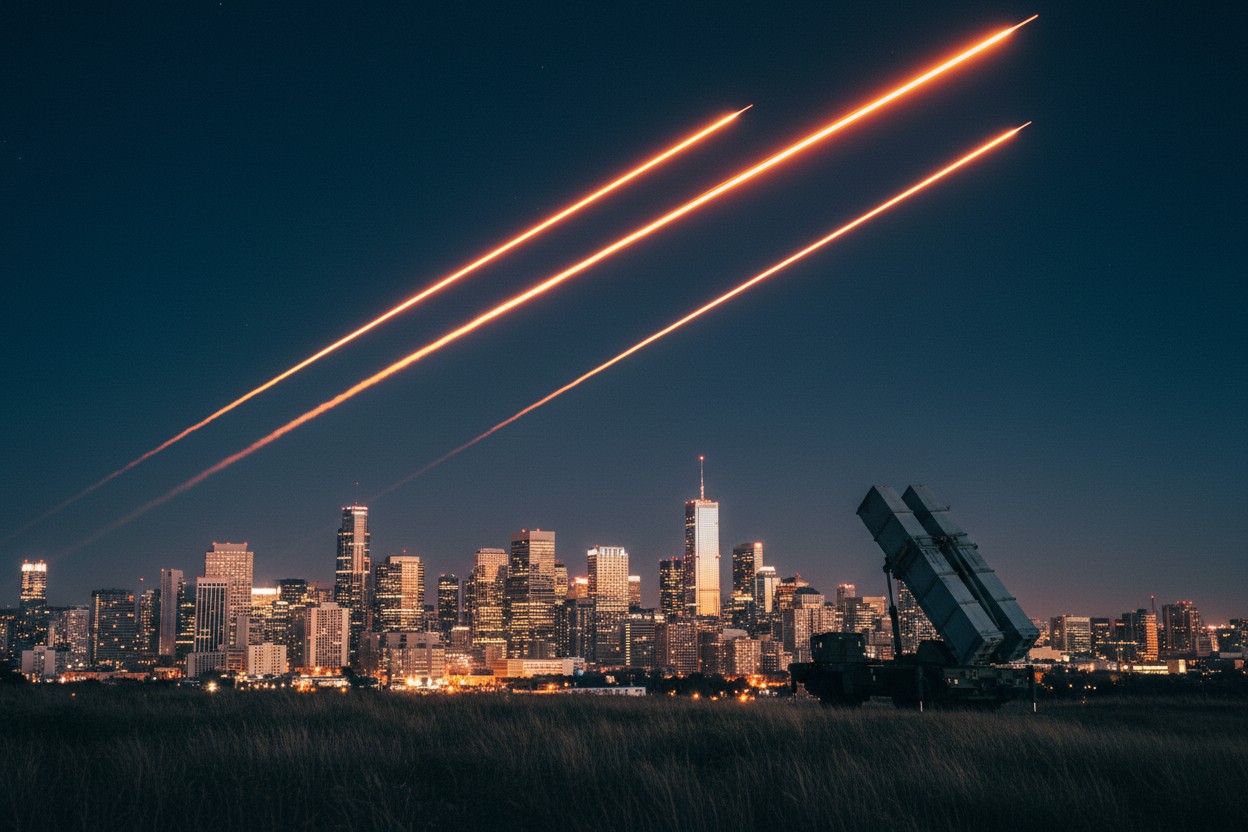
- Russia launched a coordinated missile and drone strike on nine Ukrainian cities, targeting military infrastructure, energy facilities and industrial sites.
- The attack killed at least two civilians and wounded 14 others across multiple regions, including Zaporizhzhia and Kharkiv.
- Ukrainian air defenses intercepted seven ballistic missiles but reported critical shortages of Patriot interceptor missiles.
- Russia's Defense Ministry confirmed strikes on UAV assembly facilities, logistics hubs and metallurgical plants supplying military production.
- The assault marks an escalation in Russia's winter campaign to cripple Ukraine's power grid and war economy.
Strategic escalation: Why Russia intensified its air campaign
Russia's military command orchestrated a massive overnight strike against nine Ukrainian cities Wednesday, demonstrating Moscow's determination to cripple Ukraine's war infrastructure as the conflict enters its fifth year. The Russian Defense Ministry confirmed its forces targeted industrial facilities, oil refineries, logistics hubs and port infrastructure across Ukraine, with civilian areas in Kyiv, Zaporizhzhia, Kharkiv and Odesa suffering collateral damage. The assault killed a 78-year-old woman in southern Ukraine and another civilian in the north, wounding at least 14 others. This attack represents Russia's latest effort to exhaust Ukrainian air defenses through sheer volume of fire while systematically degrading the country's ability to sustain military operations through winter.Military infrastructure under fire: Industrial targets hit
Russian forces struck critical military-industrial targets across Ukraine, focusing on facilities that sustain Kyiv's war effort. In the Kyiv region, strikes hit a UAV assembly workshop producing Hornet loitering munitions and a major transport-logistics center storing FPV strike drones, ground control stations and components. Another logistics hub in Boryspil, a dual-use facility for long- and medium-range UAV components, was also damaged. In Zaporizhzhia and Kryvyi Rih, Russian missiles crippled metallurgical plants that serve as key suppliers of steel products for military production. Russian officials described these as "all designated facilities" being successfully engaged by air, land and sea-based weapons. Mayor Vitali Klitschko confirmed this marked the first time in months that critical infrastructure in Kyiv was "purposefully attacked," warning residents of the Desnyansky and Dnipro districts to expect disrupted hot water supplies. The strikes cut power to thousands of properties, plunging parts of the capital into darkness.Air defense shortages: Ukraine's vulnerability exposed
Ukrainian air defenses intercepted seven Russian ballistic missiles during the barrage, though officials acknowledged that none of the ballistic missiles targeting Kyiv were successfully engaged. The Ukrainian Air Force reported that defenses shot down or suppressed the missiles but did not specify how they achieved those results. President Volodymyr Zelensky emphasized that "the interceptors for the Patriots have not yet been replaced," noting that each additional missile saves Ukrainian lives. Ukraine has relied heavily on American-supplied Patriot interceptor missiles to counter Russian ballistic missiles, but U.S. stockpiles have been depleted during operations against Iran. European nations have pledged additional air defense assistance, but Zelensky stressed the need for "ballistic missile defense packages" through European purchases of American weapons. The air defense gap leaves Ukrainian cities vulnerable to Russia's growing arsenal of fast-flying jet-powered drones and ballistic missiles.Civilian suffering: Winter warfare intensifies
The attack on nine cities damaged residential buildings, schools, medical facilities and energy infrastructure. In Kyiv's Solomyanski district, a school's windows were blown out and playing fields covered with debris. A nearby boiler house supplying heat to surrounding apartment blocks was destroyed. In Odesa, a 16-story residential building and two educational facilities were damaged, along with a grain elevator critical to Ukraine's agricultural exports. Four powerful glide bombs destroyed generating equipment at the Kherson region's combined heat and power plant, forcing its shutdown. Ukrainian Deputy Intelligence Chief confirmed this was the kind of attack Russia planned ahead of winter to make life as difficult as possible for civilians. Train services experienced delays exceeding 17 hours following the strikes.Mutual destruction: Ukraine's long-range campaign continues
Ukraine retaliated by launching hundreds of long-range drones against Russian targets, with Russia's Defense Ministry reporting 267 Ukrainian drones shot down over 14 regions, Crimea, the Sea of Azov and the Black Sea. Ukrainian drone strikes targeted Ozon logistics facilities in Orenburg and Ufa, following previous attacks on Wildberries warehouses. Ukraine's General Staff confirmed plane-launched missiles struck Russian command posts near Donetsk. In Russia, air defenses downed 726 Ukrainian drones across various regions, with attacks on Moscow killing at least 16 people including one child. Ukraine has increasingly targeted Russian e-commerce and logistics infrastructure, aiming to inflict economic pain on Moscow while disrupting military supply chains.Protracted stalemate: No end in sight
Despite the escalating violence and mounting casualties on both sides, diplomatic efforts remain stalled. Russia rejects Ukraine's demands for an unconditional ceasefire, while Ukraine refuses territorial concessions. Russia controls approximately one-fifth of Ukrainian territory, concentrated in eastern border regions. Both sides accuse each other of targeting civilians, with the conflict now entering its fifth year since Russia's full-scale invasion in February 2022. For one Ukrainian woman awaiting news of missing relatives, the human cost of this attritional warfare is tragic: "The war might end, but for those of us with family still missing, the war will never be over until they come home." The conflict has become a protracted war of attrition with no clear victor, where civilian suffering and military escalation remain inextricably linked. As winter approaches and both sides stockpile munitions, the pattern of massive strikes and mutual destruction shows no signs of abating. Sources for this article include: SputnikGlobe.com ABCNews.com BBC.com
Russian Intelligence Chief Warns of Real Risk of Large-Scale Conflict in Eurasia
By Garrison Vance // Share

New Saudi Nuclear Agreement Raises Concerns for Ending Iran Conflict
By Garrison Vance // Share


“UNBREAKABLE” on Bright U: What happens when we never switch off transmitters
By Belle Carter // Share


Study: Breakfast After Noon Linked to 29% Higher Risk of Early Death
By Coco Somers // Share

Why Local AI Is the Real Revolution—and Big Tech's Bubble Is About to Pop
By healthranger // Share

The MAHA Mirage: Why I'm Done Waiting for Political Saviors To Keep Their Promises
By healthranger // Share

Trump Just Begged Putin for a Diesel Bailout: The Energy Crisis Is Here and It's Going to Get Worse
By healthranger // Share

Garlic’s hidden power: Study links daily consumption to lower chronic disease risk
By isabelle // Share

Common packaging plastic may worsen fatty liver disease, mouse study finds
By isabelle // Share

Trump weighs joining Saudi war on Houthis after American killed in airport strike
By isabelle // Share