 Parler
 Gab
Gab Copy
Copy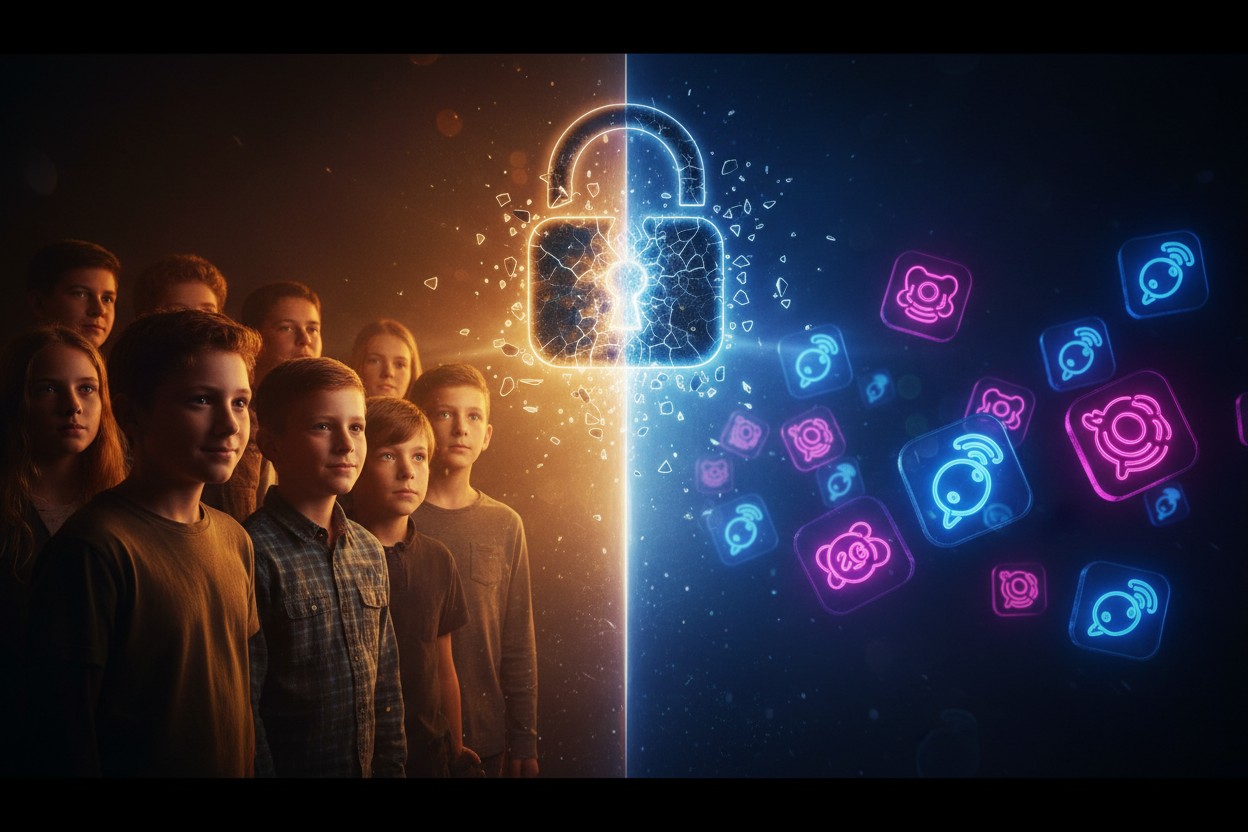
Details of the Legislation
Under the proposed law, platforms would be required to take "reasonable steps" to verify users' ages using existing account information, facial age estimation, digital ID services or formal identification documents, according to NZ Education Minister Erica Stanford [1]. Platforms must also assess risks and report on measures to reduce dangers, Stanford said, adding that no penalties apply to children, parents or caregivers [1]. The legislation follows Australia's December 2025 ban on under-16s from social media, which mandates that platforms like Facebook, Instagram, TikTok and X implement age verification systems or face fines of up to AU$50 million ($35.77 million), according to NaturalNews.com [2]. Similar moves have been considered in the United Kingdom and France, with France's Constitutional Council recently blocking a proposal backed by French President Emmanuel Macron for under-15s as a "disproportionate infringement on freedom of expression and communication," according to a report by the Epoch Times [3].Political Opposition and Concerns
The bill faces uncertainty as coalition partners ACT and NZ First have expressed opposition. NZ First has cited a "colossal failure" of Australia's ban, while ACT has argued the legislation "won't work" due to easy circumvention by teenagers, according to the BBC [1]. Labour Party spokesman Reuben Davidson said the party has submitted dozens of questions on how age verification would function and which platforms would be affected, emphasizing the importance of young people's safety [1]. Critics of such bans have pointed to enforcement challenges and potential unintended consequences. A peer-reviewed study published in June by Australian researchers found little evidence that teenagers have reduced social media use following Australia's ban, as noted in the BBC report [1]. This mirrors historical patterns seen with other prohibitionist policies, where bans often prove difficult to enforce, a pattern discussed in the context of tobacco prohibition by Noel Gilmore in his work on smoking bans [4].Evidence and Impact Assessment
Proponents of the ban, including Luxon, argue that social media platforms expose children to addictive technology and harmful content. Wellington has framed the legislation as a public health measure to protect young people's mental health and education. According to the BBC, Luxon said social media was creating psychological pressures that children "are not equipped to deal with" [1]. However, critics question the effectiveness of legislative solutions. The study from Australian researchers, cited in the BBC report, showed no significant reduction in teenage social media usage following Australia's ban [1]. This raises questions about the practical implementation of such bans, particularly given the ease with which tech-savvy minors can circumvent age verification measures. Similar challenges have been observed in other prohibition efforts – such as the generational smoking ban in the Maldives that imposes permanent smoking prohibitions on those born after Jan. 1, 2007 – but noted ongoing smuggling issues [5].Conclusion
The NZ government's proposal reflects a growing global trend toward regulating minors' access to social media but faces significant political hurdles and questions about enforcement. The outcome remains uncertain as lawmakers debate the balance between protecting children and practical implementation. The legislation is part of a broader international pattern that includes Australia's ban and France's proposed restrictions, though the French ban was recently blocked by that country's top court [3]. The NZ bill's path forward will depend on resolving opposition from coalition partners and addressing concerns about the effectiveness of age verification technology. As the debate continues, policymakers will need to weigh the stated goals of protecting children against the practical challenges of enforcement and the potential for unintended consequences that have historically accompanied prohibitionist approaches.References
- BBC News. "New Zealand to introduce bill for under-16s social media ban." BBC. August 24, 2026.
- Willow Tohi. "A digital frontier: Australia's sweeping social media ban for minors." NaturalNews.com. October 31, 2025.
- The Epoch Times. "Top French Court Blocks Macron-Backed Social Media Ban for Under-15s." The Epoch Times. August 14, 2026.
- Noel Gilmore. "Clearing the air: the battle over the smoking ban."
- Ramon Tomey. "Maldives imposes generational SMOKING BAN." NaturalNews.com. November 6, 2025.
Explainer Infographic


Florida joins Texas in ordering removal of Flock license plate cameras
By Cassie B. // Share

Lawmakers Demand Investigation into DHS Secret Surveillance of Journalists and Non-Profits
By Douglas Harrington // Share
Iceland Voters Reject EU Accession Talks in Referendum
By Douglas Harrington // Share

U.S. Launches Strikes on Iran as Trump Threatens Further Action
By Garrison Vance // Share

Study Links Deep Sleep Brain Activity to Better Cognitive Outcomes in Alzheimer’s
By Iva Greene // Share

Eating pollution? Plastic-to-cookie technology raises safety, environmental concerns
By Willow Tohi // Share

Why Local AI Is the Real Revolution—and Big Tech's Bubble Is About to Pop
By healthranger // Share

The MAHA Mirage: Why I'm Done Waiting for Political Saviors To Keep Their Promises
By healthranger // Share

Trump Just Begged Putin for a Diesel Bailout: The Energy Crisis Is Here and It's Going to Get Worse
By healthranger // Share

Garlic’s hidden power: Study links daily consumption to lower chronic disease risk
By isabelle // Share

Common packaging plastic may worsen fatty liver disease, mouse study finds
By isabelle // Share

Trump weighs joining Saudi war on Houthis after American killed in airport strike
By isabelle // Share