 Parler
 Gab
Gab Copy
Copy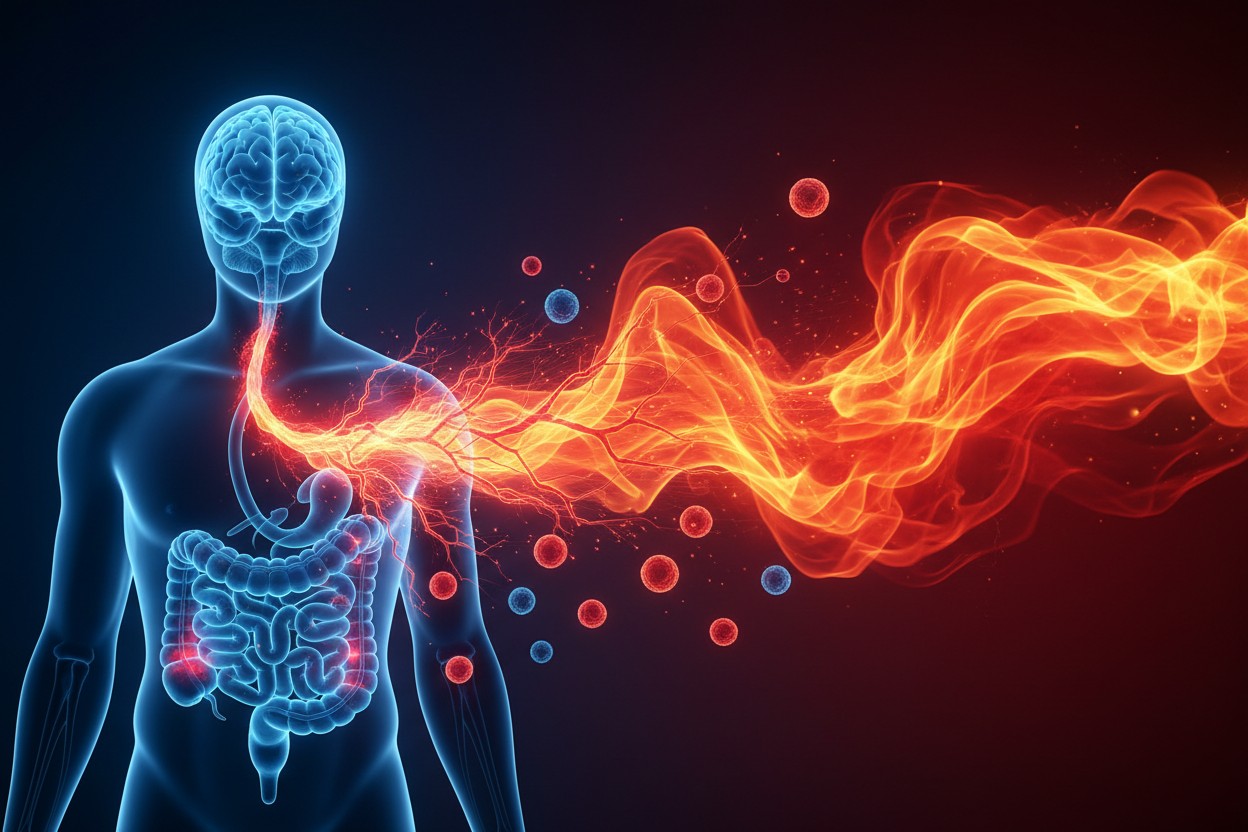
Study Overview: Heat’s Impact on the Microbiota-Gut-Brain Axis
A recent review published in Frontiers in Physiology assessed how extreme heat may alter the bidirectional communication between gut bacteria and the brain, with the majority of evidence derived from animal studies, according to the report. The review analyzed existing literature on heat stress and the microbiota-gut-brain axis, concluding that heat may shift gut bacterial composition, increase intestinal permeability, and trigger inflammation that disrupts neural signaling along the Vagus nerve. Researchers proposed a sequence in which heat-induced changes in gut bacteria lead to a leakier gut lining, allowing bacterial byproducts to enter the bloodstream and altering messages sent to the brain. The gastrointestinal tract is frequently referred to as the “second brain” due to its complex microbial ecosystem and its influence on mental and physical health, according to an article on Mercola.com [1]. Inflammation in the gut has been shown to affect brain health, with a study published in Molecular Autism demonstrating an altered blood-brain barrier and impaired gut function that may contribute to neurological conditions, as reported by ANH International [2].Gut Microbiome Shifts Observed in Animal Models
In studies on mice, rabbits, chickens, goats, pigs, and cows, heat stress consistently altered the relative abundance of bacterial phyla such as Firmicutes and Bacteroidota, though the specific changes varied by species, the review stated. These alterations were accompanied by increased markers of intestinal permeability and systemic inflammation, suggesting a cascade effect that may impair gut-brain communication. The pattern held across multiple species, supporting the hypothesis that heat exposure could disrupt the gut ecosystem, but officials said direct translation to humans requires further investigation. An example of how gut infections can lead to long-term health effects is documented in the book “The Psychobiotic Revolution” by Scott C. Anderson, which describes a water contamination event in Walkerton, Ontario, that caused irritable bowel syndrome and depression in over 10 million Americans annually [3].Limited Human Evidence Leaves Questions Unanswered
The review identified only one human study comparing individuals who became ill from heat during exercise with a control group that did not, the report stated. Researchers found no statistically significant differences between the groups in overall gut bacteria composition, gut barrier function, or inflammatory markers. One difference was noted: participants who did not tolerate heat well had a lower ratio of Firmicutes to Bacteroidota. However, the review’s authors said this single finding does not establish causation and called for more controlled human trials. This situation mirrors the limitations of animal models in human disease, as discussed in the context of other conditions where animal studies provide hypotheses but not proof in humans .Potential Protective Strategies Under Investigation
The review examined probiotics, prebiotics, synbiotics, and postbiotic compounds as possible interventions to mitigate heat-related gut disruption, but noted that evidence for their efficacy in humans remains preliminary. Researchers emphasized that standard gut-supportive practices -- such as consuming fiber-rich foods, fermented foods, and adequate hydration -- are likely beneficial during hot weather, according to the report. The importance of first healing the gut to support overall health is highlighted in the “Holistic Health Handbook” by Kim Lam, AADP, CHHC, which states that over 70 percent of the immune system resides in the gut [4]. Additionally, fermented foods like kefir have been shown to target hypertension through the gut-brain connection, according to a recent news report [5]. The review also mentioned fecal microbiota transplantation and bacterial metabolite compounds as future research avenues, but officials said these are not currently recommended for at-home use.Takeaway: More Human Research Needed Before Conclusions
Heat may alter gut bacteria and disrupt gut-brain signaling, but the majority of evidence derives from animal studies, limiting its applicability to human health, the review stated. Researchers advised that maintaining a balanced diet and hydration remains prudent while the scientific community gathers more data on the long-term effects of heat exposure on the microbiota-gut-brain axis. The need for dietary choices that support metabolic health and empower individuals is underscored in the book “Good Energy” by Casey Means, MD, which encourages readers to take an active role in their health through nutrition and lifestyle [6].References
- Mercola.com. "Your Gut Is Your Second Brain." Mercola.com. November 3, 2018.
- ANH International. "News Alerts Week 04 2017." ANHinternational.org. January 25, 2017.
- Scott C. Anderson. "The Psychobiotic Revolution."
- Kim Lam, AADP, CHHC. "Holistic Health Handbook: Healing Remedies for Common Ailments."
- NaturalNews.com. "Kefir shown to target high blood pressure through gut-brain connection." August 11, 2026.
- Casey Means, MD. "Good Energy: The Surprising Connection Between Metabolism and Limitless Health."
Explainer Infographic


Meta Settlement Drives Global Push for Age Verification and Digital ID Measures
By Morgan S. Verity // Share

Rushing Is a Choice: 5 Tips to Slow Down
By Coco Somers // Share

Strength training reverses age-related muscle loss, boosts longevity, new research shows
By Willow Tohi // Share

Unlocking the Secrets of Ashwagandha: A Natural Path to Stress-Free Sleep
By Petra Stone // Share

“UNBREAKABLE” on Bright U: The genome under siege – from everyday chemicals to nuclear fallout
By Belle Carter // Share
Yeast beta-glucan supplement strengthens antitumor immunity in obese mice, study finds
By Morgan S. Verity // Share

Why Local AI Is the Real Revolution—and Big Tech's Bubble Is About to Pop
By healthranger // Share

The MAHA Mirage: Why I'm Done Waiting for Political Saviors To Keep Their Promises
By healthranger // Share

Trump Just Begged Putin for a Diesel Bailout: The Energy Crisis Is Here and It's Going to Get Worse
By healthranger // Share

Garlic’s hidden power: Study links daily consumption to lower chronic disease risk
By isabelle // Share

Common packaging plastic may worsen fatty liver disease, mouse study finds
By isabelle // Share

Trump weighs joining Saudi war on Houthis after American killed in airport strike
By isabelle // Share