 Parler
 Gab
Gab Copy
Copy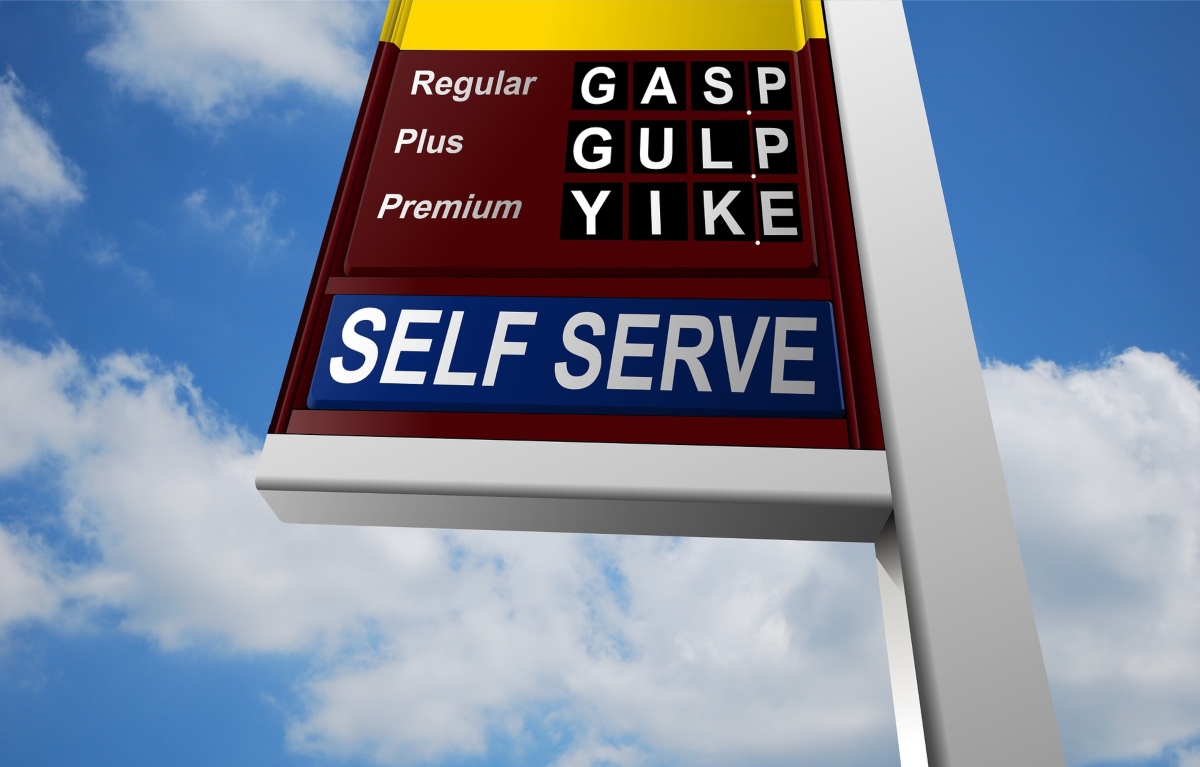
- U.S. average gas prices have surged 56% since the U.S. bombed Iran in late February, reaching $4.517 per gallon.
- Consumer Price Index rose 3.8% year-over-year in April, the largest jump in three years, driven by energy costs.
- The Strait of Hormuz blockade has caused what the International Energy Agency calls the "largest supply disruption in history".
- More than 80% of Americans report gas prices are straining household budgets.
- Average hourly wages fell 0.3% after accounting for inflation, the first year-over-year decline in three years.
Energy wars and American vulnerability
What makes the current situation historically distinct is its scale. The Strait of Hormuz blockade represents a more comprehensive disruption than previous episodes because it simultaneously cuts off oil from Saudi Arabia, Iraq, Kuwait, the United Arab Emirates and Qatar. Unlike 1973, when Arab producers selectively embargoed the U.S., Iran's action blocks passage for all nations, creating a global supply crisis with particularly acute effects on American consumers. The U.S. Strategic Petroleum Reserve, established after the 1973 crisis to provide a buffer against exactly this scenario, has been drawn down significantly in recent weeks to moderate price increases. However, reserve levels are declining rapidly, raising fears that without a political resolution, prices could climb to levels previously considered unthinkable.The economic toll: Wages fall as costs rise
The inflation report revealed a particularly troubling development for American workers: after adjusting for inflation, average hourly wages fell 0.3% in April compared with a year earlier, the first year-over-year decline in three years. This means that despite nominal wage increases, workers are losing ground to rising costs. "People are experiencing it directly," said Lee Miringoff, director of the Marist Institute for Public Opinion, in comments reported by PBS NewsHour. A new PBS News/NPR/Marist poll found that 56% of Americans now say the cost of living in their area is not affordable, with 12% describing it as "not affordable at all." More than 80% reported that gas prices are putting strain on their budgets.Political implications: Inflation reshapes 2026 elections
The economic crisis arrives as voters prepare to head to the polls Nov. 3 to determine control of Congress. President Donald Trump's Republican Party currently holds narrow majorities in both chambers, and inflation is emerging as the defining issue of the midterm campaign. Trump has publicly criticized the Federal Reserve and its outgoing chair, Jerome Powell, for refusing to cut interest rates to stimulate the economy during the crisis. Kevin Warsh, Trump's nominee to succeed Powell, faces Senate confirmation this week. However, it remains unclear whether Warsh would pursue accommodative monetary policy given the inflationary pressures already underway, or whether he could persuade the Federal Open Market Committee to support such a course.The human cost: Families make hard choices
Grace King, a 31-year-old administrative assistant in Ames, Iowa, told PBS NewsHour that higher food and fuel prices have forced her to eliminate discretionary spending. She previously spent approximately $200 monthly on clothing through Amazon but has stopped entirely. "The pressure is everywhere from the groceries to the gas to fill up the tank," King said. While her commute to work is only five minutes each way, she makes the trip twice daily. Major shopping requires a 40-minute drive to Des Moines—a trip she now thinks twice about. Her experience is being replicated in millions of households nationwide. The AAA motor club reported the national average price for regular gasoline above $4.50 on Tuesday, with higher prices concentrated in Western states where fuel taxes and environmental regulations add further costs.A crisis without clear resolution
The United States now faces an energy crisis with no obvious exit strategy. Diplomatic efforts to reopen the Strait of Hormuz have faltered, with the New York Times reporting that hopes for an end to the war faded after President Trump failed to secure Chinese assistance in persuading Iran to restore access. The headline from that report—"Oil Prices Climb on Fears of Broader Energy Crunch"—captures the prevailing uncertainty. The Federal Reserve, which had been expected to begin cutting interest rates in 2026, has adopted a cautious posture, waiting to assess whether higher energy prices will trigger broader inflationary outbreaks across other sectors of the economy. Meanwhile, the Strategic Petroleum Reserve continues to diminish, raising the prospect that future price increases will be even steeper. For American families, the immediate reality is one of diminished purchasing power and constrained choices. For policymakers, the crisis represents a test of whether the nation's energy security strategies—developed over decades in response to previous oil shocks—are adequate to address a disruption of this magnitude. The answer, based on the evidence so far, appears uncertain at best. Sources for this article include: CleanTechnica.com Facebook.com PBSNews.org
Trump Threatens to “Blow Up” Oman Over Strait of Hormuz Fee
By Garrison Vance // Share
Iran and U.S. trade fire for second time in a week as Hormuz ceasefire frays
By Cassie B. // Share

We’re Stuck in the Escalation Trap — And Here’s Why It May Cost Us Everything
By Mike Adams // Share

Pentagon Releases New UFO Videos, Prompting Biblical Comparisons
By Garrison Vance // Share

Trump Media Transfers Bitcoin to Exchange as Unrealized Losses Reach $455 Million
By Sterling Ashworth // Share

Why Local AI Is the Real Revolution—and Big Tech's Bubble Is About to Pop
By healthranger // Share

The MAHA Mirage: Why I'm Done Waiting for Political Saviors To Keep Their Promises
By healthranger // Share
Trump Just Begged Putin for a Diesel Bailout: The Energy Crisis Is Here and It's Going to Get Worse
By healthranger // Share

Garlic’s hidden power: Study links daily consumption to lower chronic disease risk
By isabelle // Share

Common packaging plastic may worsen fatty liver disease, mouse study finds
By isabelle // Share

Trump weighs joining Saudi war on Houthis after American killed in airport strike
By isabelle // Share