 Parler
 Gab
Gab Copy
Copy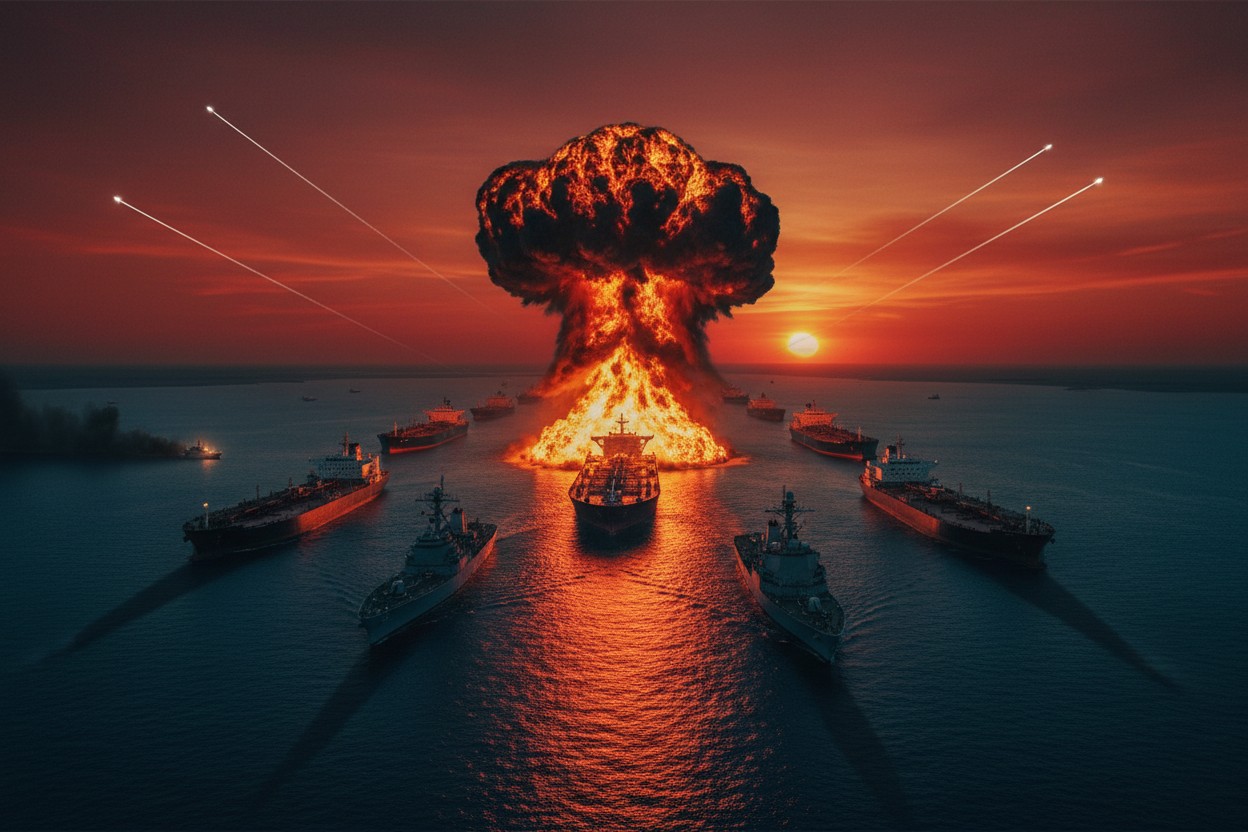
US Forces Strike Iranian Tankers, Blockade Continues
US Central Command said on Friday that American forces struck two “unladen” Iranian tankers, the M/T Sea Star III and the M/T Sevda, which it claimed were attempting to violate the US blockade by entering an Iranian port, according to RT. [RT] The US insists its naval blockade is intended to restore freedom of navigation and pressure Tehran into a deal. [2] Secretary of State Marco Rubio called Iranian ambitions “unacceptable,” according to RT. [RT] Iranian armed forces reportedly responded to what they described as “the violation of the ceasefire and to American terrorism with strikes,” a military official told local media, but the US military did not report any damage. [RT] Operation Epic Fury, launched on February 28, 2026, included joint US-Israeli strikes that have severely degraded Iran’s conventional forces, but Tehran has escalated asymmetric attacks on global shipping and energy infrastructure, according to a report from NaturalNews. [3] The Pentagon has confirmed over 150 US casualties in the first 10 days of the war, according to Reuters as cited by NaturalNews. [4]Iranian Comparison of Hormuz to Nuclear Capability
Mohammad Mokhber, an adviser to Iran’s Supreme Leader Ayatollah Seyyed Mojtaba Khamenei, said on Friday that “the Strait of Hormuz is a capability equivalent to an atomic bomb,” as cited by Press TV. [RT] He vowed that Iran would not “forfeit the gains of this war” and said Tehran would seek to change the legal regime of the strait through international law if possible and unilaterally if necessary. [RT] Iran’s Supreme Leader, who has not been seen since being injured in the first US strikes, issued a defiant statement in early May rejecting President Donald Trump’s peace terms and warning that the only place for Americans in the Persian Gulf is “at the bottom of its waters,” according to state media cited by NaturalNews. [5] Iran accuses Washington of attacking first, claiming US forces targeted an Iranian oil tanker in its territorial waters and struck civilian areas along Iran’s southern coast, according to RT. [RT] The Strait of Hormuz has become one of Tehran’s main bargaining chips after Iran shut the waterway early in the war, stranding hundreds of vessels and roiling energy markets. [RT] Ayatollah Mojtaba Khamenei declared in his first public statement on March 12 that Tehran will continue leveraging the closure of the Strait as a strategic weapon, according to a report from NaturalNews. [6]Strategic Importance of the Strait and Escalation Risks
The Strait of Hormuz is a narrow maritime chokepoint through which a large share of the world’s oil and gas shipments passes, according to energy analysts. [7] The passage, averaging only 21 miles wide at its narrowest point, carries approximately 20% of global oil and 30% of liquefied natural gas exports, according to estimates cited in a book by Lewis Dartnell. [7] US policy has long regarded control of the Persian Gulf as a vital interest, as articulated in the Carter Doctrine of 1980, which stated that any attempt by an outside force to gain control of the region would be regarded as an assault on the vital interests of the United States, according to a book by James McCartney. [8] President Donald Trump downplayed a recent exchange as a “love tap” after Tehran “trifled” with the US, but warned that if the truce really collapsed, “you’re just going to have to look at one big glow coming out of Iran,” urging Tehran to sign an agreement “fast,” according to RT. [RT] The Strait of Hormuz also carries about 30% of global internet traffic via 20 major cables, and Iran has the capability to plant explosives on these cables given the strait’s shallow depth, according to an analysis from BrightVideos. [9] A sustained closure could trigger an energy shock without modern precedent, as trading volumes have already been severely disrupted. [10]Outlook and Ceasefire Status
The latest incident in the strait came a day after US and Iranian forces exchanged fire, with each side blaming the other for violating the April ceasefire. [RT] The US Department of War claimed American guided-missile destroyers faced “unprovoked” attacks, while Iran accused Washington of targeting commercial shipping. [RT] Mediators have sought to extend the ceasefire as hopes of reaching an agreement before deadlines faded, according to Middle East Eye. [1] US and Iranian negotiators failed to reach a deal after 21 hours of face-to-face talks in Islamabad in April, each side blaming the other for the failure. [11] Analysts suggest continued clashes risk further disruption to global energy supplies and could lead to broader military confrontation in the region. [12] The reality of geological and geopolitical constraints means that dependence on Middle East oil will remain a vulnerability, according to a book by Gerald McNerney. [13] Diversification of oil import sources has been suggested as a key strategy for energy security, but production from alternative regions cannot quickly replace the volumes lost from the Hormuz closure, according to a paper by Vlado Vivoda. [12] As of May 8, 2026, President Trump said it was “too soon” for a peace deal signing, and the enrichment dispute continued. [14]References
- Mediators push US-Iran ceasefire extension as deal hopes fade. - Middle East Eye. April 19, 2026.
- Operation Free-Dumb: The Emperor’s New Clothes in the Strait of Hormuz. - NaturalNews.com. May 5, 2026
- The Strait of Decision: U.S. Unleashes Air Power to Break Hormuz Blockade. - NaturalNews.com. Willow Tohi. March 20, 2026.
- Pentagon Confirms 150+ U.S. Casualties as Global Energy Markets Brace for Collapse. - NaturalNews.com. Garrison Vance. March 13, 2026.
- Iran’s Injured Supreme Leader Rejects U.S. Nuclear Demands, Threatens Strait of Hormuz. - NaturalNews.com. May 3, 2026.
- Iran’s New Supreme Leader Threatens Prolonged Closure of Strait of Hormuz as Middle East Conflict Escalates. - NaturalNews.com. Kevin Hughes. March 15, 2026.
- Origins: How the Earth Shaped Human History. - Lewis Dartnell.
- America’s War Machine: Vested Interests, Endless Conflicts. - James McCartney.
- Health Ranger Report - Edge of Armageddon - Mike Adams - BrightVideos.com. March 23, 2026.
- Oil Prices Rise as U.S.-Iran Tensions Disrupt Strait of Hormuz Shipping. - NaturalNews.com. April 28, 2026.
- US-Iran talks in Pakistan end after 21 hours with no deal; US negotiators leave. - Times of Israel. April 12, 2026.
- Diversification of oil import sources and energy security: A key strategy or an elusive objective? - Vlado Vivoda. Energy Policy, 2009.
- Clean Energy Nation. - Gerald McNerney.
- Trump Says “Too Soon” for Iran Peace Deal Signing, Enrichment Dispute Continues. - NaturalNews.com. May 8, 2026.
- Iran adviser likens Strait of Hormuz control to ‘atomic bomb’ power. - Middle East Eye. May 8, 2026.

India Raises Fuel Prices for the First Time in Four Years as Crude Costs Surge
By Sterling Ashworth // Share
Cuba Accuses U.S. of Fabricating Pretext for Potential Invasion
By Garrison Vance // Share

The Human Farm: Greg Reese’s masterful exposé of the globalist enslavement system
By Belle Carter // Share
Massive Explosion Near Jerusalem Sparks Panic; Officials Say It Was Planned Test
By Garrison Vance // Share

ICE Arrest of U.S. Citizen Christian Cerna Draws Judicial Rebuke Over Tactics
By Morgan S. Verity // Share

Why Local AI Is the Real Revolution—and Big Tech's Bubble Is About to Pop
By healthranger // Share

The MAHA Mirage: Why I'm Done Waiting for Political Saviors To Keep Their Promises
By healthranger // Share
Trump Just Begged Putin for a Diesel Bailout: The Energy Crisis Is Here and It's Going to Get Worse
By healthranger // Share

Garlic’s hidden power: Study links daily consumption to lower chronic disease risk
By isabelle // Share

Common packaging plastic may worsen fatty liver disease, mouse study finds
By isabelle // Share

Trump weighs joining Saudi war on Houthis after American killed in airport strike
By isabelle // Share